
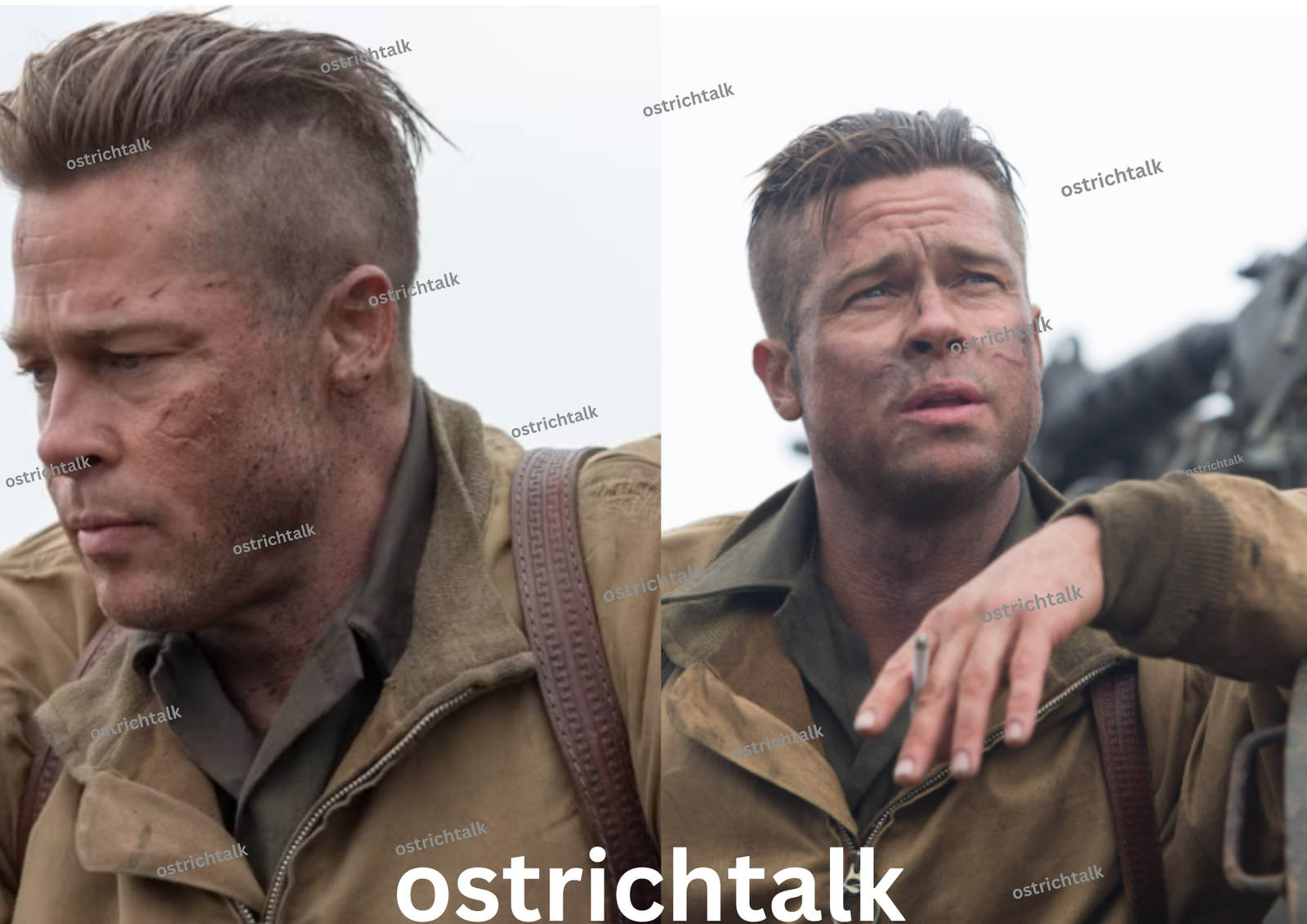
The brad pitt ww2 movie Fury is one of the most memorable war films of all time. Written by writer David Ayer, it was an action adventure about tank crews which made Brad Pitt a household name for his intense, nonchalant leadership during wartime. This article delves into the production process of this Brad Pitt WW2 film, its cast, its historical accuracy, and why it remains a topic of conversation even after 10 years of its release.
What is the movie Fury about in the 1939–45 War?
The Brad Pitt WW2 movie chronicles the journey of a tank crew fighting its way through Nazi Germany in the last and grueling weeks of World War II. Brad Pitt stars as Sergeant Don “Wardaddy” Collier, a hardened tank commander who commands a Sherman tank named Fury and leads four beat-up crewmembers. Due to the time setting of the film, viewers witness soldiers who already feel the war’s end lose battles during some of its most dire days in April 1945. As a result, the Brad Pitt WW2 film seems less heroic and more survivalist drenched in grime, terror, and fatigue.
This Brad Pitt war film in WW2 isn’t as heroic as other war movies, doesn’t sanitize war, doesn’t offer you moral lessons. Instead, it requires viewers to sit in a state of discomfort, demonstrating to them the power of ordinary men under prolonged stress to become capable of shocking brutality. Often, critics point out that the film’s unglamorous style distinguishes it from the other World War II films which relied so heavily on patriotic sentiment.
The Cast of the WW2 Film cast Behind the Brad Pitt.
Brad Pitt as Wardaddy.
Brad Pitt is the quietly menacing Wardaddy, with more in common with a cyborg than an action hero. He is controlled in this WW2 film starring Brad Pitt, allowing silence and minuscule gestures to convey years of trauma. It’s one of his most physically demanding roles, and was reportedly a lot of practice for Pitt to get into the tank and seem natural.
Supporting Cast Members
Logan Lerman stars as Norman Ellison, a green recruit in Wardaddy’s crew without combat training. The bond between them is their emotional center, a stark contrast between the battle weary cynicism and the naivety of youth in the Brad Pitt WW2 movie. Also joining the tank crew are Shia LaBeouf, Jon Bernthal and Michael Peña each of whom has his own personality and psychological reaction to prolonged warfare.
Production Details of the Brad Pitt WW2 Movie.
The following table provides important facts about the production of the Brad Pitt WW2 movie, so readers can get an overview of the movie’s background.
| Detail | Information |
| Director | David Ayer |
| Release Date | October 17, 2014 |
| Setting | Germany, April 1945 |
| Supporting Cast | Logan Lerman, Shia LaBeouf, Jon Bernthal, Michael Peña |
| Featured Vehicle | M4A3E8 Sherman Tank |
The table reveals that the movie of Brad Pitt WW2 was based on details and research, not on general wartime images. With the attention paid to accuracy, the same care was taken with the costumes, weapons, and even with tank models used for shooting.
The Brad Pitt WW2 movie is quite realistic
Historical Accuracy in Combat Scenes
Military historians honor the Brad Pitt WW2 film as a rare attempt to portray tank warfare as a technical reality. Filmmakers rendered the battle scenes as if they were real by using a genuine, operational Sherman tank and a rare German Tiger tank, giving the film an authenticity that many war films lack. These cars were realistic in their performance, so the battles were not as fluffy as most action films do.
The Film takes creative liberties.The Film takes creative liberties
The Brad Pitt WW2 film, however, does have some historical time lines cut for drama, as do war movies in general. The filmmakers fictionalized certain military unit movements and battle locations to fit the narrative, rendering them not necessarily accurate from a military history perspective. However, the underlying emotional truths of tiredness, brutality and moral degradation are based on the words of real wartime veterans.
Themes addressed in the movie starring Brad Pitt about WW2
The Cost of Survival
The Brad Pitt WW2 movie is more than just about big screen action; it’s about the mental anguish that soldiers must endure to stay “normal” in battle. Norman experiences the harshness of his mentor, Wardaddy, which is not just brutal it’s a survival tactic. The film resists easy answers, confronting its audience with uncomfortable questions about violence, morality, and the necessity of war long after the credits roll.
Brotherhood Under Pressure
The film, set in WW2, portrayed the men working on the tanks in a serious and intense manner, yet it illustrated many authentic moments of camaraderie between the individuals who served in the tank. These men are bound by traumatic common bonds, and this loyalty goes beyond their personalities and backgrounds. This theme is extremely appealing to every audience, veterans and civilian, as it speaks to the universal truths of bonding that can occur when we are at our lowest ebb.
This is a critical reception of the movie about WW2 starring Brad Pitt
The movie for Brad Pitt about WW2 received generally positive reviews and was lauded by critics for its unflinching portrayal of the brutal reality of tank warfare. Numerous critics pointed out that, instead of developing the film’s story, it went for pure visceral intensity, but most said they were satisfied with the trade-off. Box office success also was solid, ensuring Fury’s success as a box office hit and strengthening Pitt’s already notable acting resume.
The Brad Pitt WW2 film has left a lasting impact on audiences, who have continued to enjoy it through home video and online streaming since its initial release. It became popular among war-film fans, many of whom consider it to be one of the greatest war films of all time, as it emphasizes realistic portrayals over stylish heroics.
The Broader History of Brad Pitt’s WWII Movies
Inglourious Basterds / Earlier War Roles
Before this film with Brad Pitt in WW2, the actor had dealt with WW2 themes in Quentin Tarantino’s Inglourious Basterds. The first was quite different, a dark comedy and a revisionist historical fantasy, not realism. In making the comparison, one sees Pitt comfortably play the extremes of drill and drama.One sees Pitt’s stylized satire and grounded, harrowing drama within the same broad genre.
Why Pitt Keeps on coming back to War Stories?
Pitt is interested in war stories, according to the interviews, because they put characters in extreme moral situations that are not found in other types of stories. He also has a long-standing fascination with the setting of World War II, and has shown it in multiple projects, making more than just a show of investing in a genre more for the purpose of making money. It’s for this reason that any new film announcement for Brad Pitt that is set for WW2 brings instant excitement to the longtime fan base of historical war films.
The Brad Pitt WW2 Movie is a great movie to watch today
The film “Brad Pitt WW2” has had various release dates for streaming, depending on the platform. Major streaming platforms have also released the movie prior to its licensing expiration, sparking renewed interest as its departure date draws near. Those looking for Fury should follow the current listings for streaming regularly, as there is often little warning about availability windows.
For viewers who want a guaranteed and permanent viewing of the film, physical media is still a good choice. With Blu-ray and digital purchase, true fans of the Brad Pitt WW2 movie can enjoy it as often as they like, regardless of changing streaming rights.
Behind-the-Scenes Filmmaking Choices
Training and Physical Preparation
The cast of the Brad Pitt WW2 movie had to do an in-depth military training before shooting it. The actors reportedly spent weeks learning how to use real tank gear, live in cramped conditions, and move with a “military discipline.” Ayer said he didn’t want the camaraderie to be played, so he said the cast shared the same discomfort to feel the same isolation as their characters.
This realism carried over into daily filming activities, and actors frequently spent hours sitting inside the tank replicas. As a result, the fatigue on display often reflected actual exhaustion rather than mere acting. Such deep commitment pushed the entire production beyond the scope of a standard studio war drama, forcing the audience to feel genuine claustrophobia in every single scene.
Cinematography and Visual Style
The film’s use of natural light and soft colors further emphasizes the grimness at its heart. Additionally, wide shots of muddy, destroyed terrain contrast sharply with claustrophobic close-ups of the tank’s interior. This contrast is a visual aid to a major concept: Soldiers confined in a small, mechanical unit with a large, chaotic destruction all around.
Production crews avoided excessive digital effects, preferring to use real explosions and stunt work wherever possible. The decision endowed the battle scenes with a tangible and substantial feel, something that many modern war movies, which rely too heavily on computer-generated imagery, may lack. As a result, it is often said that the fighting is so “viscerally uncomfortable” that it is not “stylized”.
The Film is compared to other modern war dramas
War film has given birth to many renowned works in the past few decades, but this is a film of a different category. While the film’s episodic structure is typical of a sweeping ensemble drama that follows the course of a military campaign, it remains focused in large part on five men trapped inside one armored vehicle during most of the proceedings.
This is not your standard high-stakes war movie, however, and it focuses on fatigue and moral bending, rather than on traditional heroism. There are numerous critics and they have been comparing it to the other claustrophobic war stories, where they have seen the same tension building techniques in these limited environments. No other film matches its perfect blend of realistic tank combat and close-up character portrayal, which drives its enduring popularity among genre fans.
Cultural Impact & Legacy
The movie has since shaped the popular perception of tank warfare. Video game developers, documentary filmmakers, and museum exhibits frequently cite the film’s imagery when depicting armored combat during the final months of the war. This crossover influence proves the success with which this production reached audiences outside of the moviegoing masses.
Film schools frequently study its cinematography and sound design as a prime example of how to fill a space with tension and maintain it without constant action. When discussing the use of tension building techniques, students often point to moments in a film when no dialogue or explosions occur but the stillness conveys the most dramatic effect. This educational significance can keep the film alive in discussions of film, even long after the initial viewing.
In addition, veterans’ organizations have sometimes employed screenings to generate a discussion of combat trauma and psychological effects. Many veterans praise the story, stating that they found the depiction of war more realistic than what is usually seen in sanitized Hollywood movies. It’s a reception among service members that brings extra value for the critical or box office numbers.
Awards recognition and industry reception.
The production itself failed to win over the big awards, but it did win awards for technical achievement in sound design and practical effects. Its production values were picked up by industry publications as a standard for future war films with similar realism. Also, several film critics put it on year end lists of the most technically accomplished films of that year.
Apart from the awards, the movie proved to be a success in terms of the commercial response that proved there was a market for grounded and less sanitized approach to war filmmaking. Box office numbers surpassed even studio estimates, sparking renewed investment in similarly gritty, historically grounded war films over the next decade. This was a financial triumph, and a trend that had a trickle-down effect on the way studios funded similar projects going forward.
The Brad Pitt WW2 Movie is a film that holds significance today for several reasons.
Over ten years later, this movie is still influencing the discussion of what Hollywood does and doesn’t do when it comes to portraying combat in an honest, non-romantic way. When new viewers watch it via streaming, they tend to say they aren’t as comfortable with it as regular action blockbuster films. This is the reaction the filmmakers went for: a reaction that stays with you, but doesn’t go away too fast.
The continued relevance is also due to the fact that it brings to light the trajectory of Brad Pitt’s career as he continues to venture into new projects in various genres. Fans exploring his oeuvre often remember him for this film, and it fits perfectly into his overall body of work, which usually features delicate, complex characters.
Here are some of the main points of the Brad Pitt WW2 movie.
- Fury chronicles the experiences of a Sherman tank crew during April 1945, as they battle through Germany.
- A seasoned sergeant named Wardaddy (Brad Pitt) leads four tired crewmembers.
- Production crews used authentic tanks, adding realism to all combat scenes.
- Critics hailed the film for its unflinchingly realistic, unpretentious depiction of tank warfare.
- Throughout his career Pitt has been at the heart of World War II settings in several films.
Final Thoughts
The Brad Pitt WW2 movie Fury remains a defining entry in modern war cinema, blending technical authenticity with raw emotional weight. Its unflinching depiction of tank combat, paired with Brad Pitt’s controlled, haunting performance, continues attracting new viewers years after release. Whether you first watched it in theaters or discovered it recently through streaming, the Brad Pitt WW2 movie offers a memorable, sobering look at the human cost of war.
Frequently Asked Questions FAQs
Q1: What is the most famous Brad Pitt WW2 movie?
Fury, released in 2014, remains the most widely recognized Brad Pitt WW2 movie, praised for its realistic tank warfare sequences.
Q2: When was the Brad Pitt WW2 movie Fury released?
The film premiered in theaters on October 17, 2014, after its release date was moved up from mid-November.
Q3: Who directed the Brad Pitt WW2 movie Fury?
David Ayer wrote and directed the film, later reuniting with Brad Pitt for other projects following its success.
Q4: Is the Brad Pitt WW2 movie based on a true story?
Fury is not based on one specific true story, though it draws heavily from documented accounts of actual tank warfare.
Q5: Did Brad Pitt appear in other World War II films?
Yes, Brad Pitt previously starred in Inglourious Basterds, a stylistically different World War II film directed by Quentin Tarantino.
