
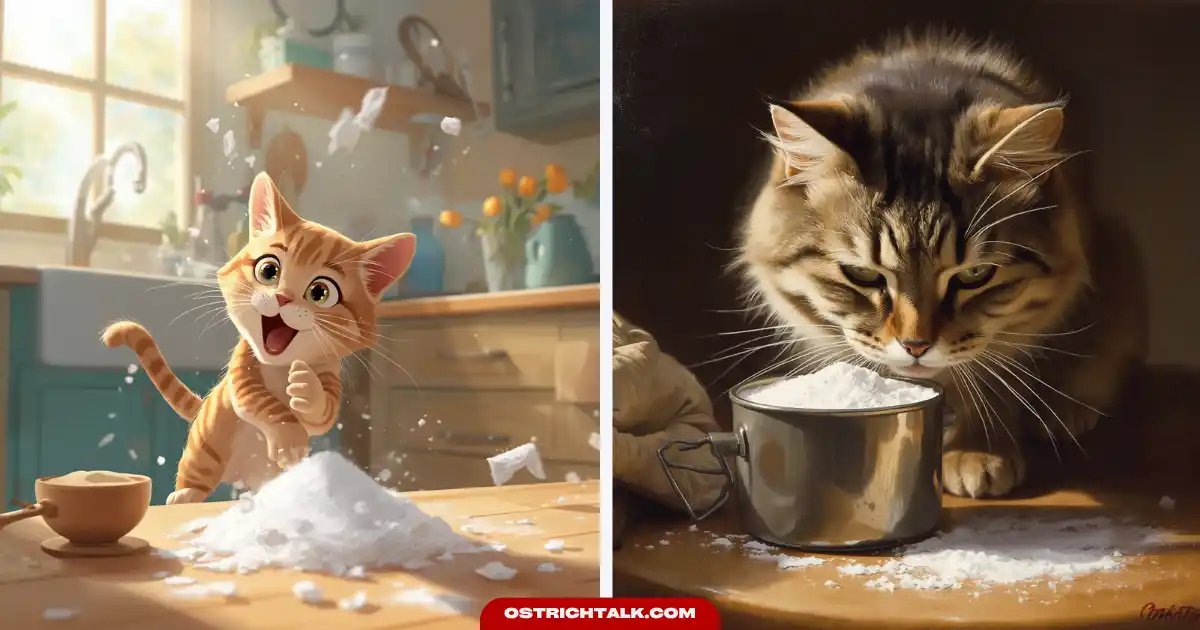
A cat owner in Texas recently contacted her vet after sprinkling baking soda on a carpet to absorb odors, only to watch her cat walk across the treated area, lick its paws, and begin vomiting within hours. The carpet itself was not the problem. The paw-licking was. That scenario plays out in veterinary offices regularly, and it captures the central issue with baking soda and cats in a single image. The substance sits in almost every household. Most people consider it harmless. For cats, the reality is more complicated, and every cat owner deserves a clear, vet-informed answer before reaching for that orange box.
What Baking Soda Actually Is and Why Cats React Differently
Baking soda is the common household name for sodium bicarbonate, a naturally occurring mineral. According to the Nutrition Sciences Department at North Carolina State University, sodium bicarbonate is a base that reacts when it comes into contact with acids. That reaction is what makes it useful in baking, cleaning, and odor control. When it meets the acidic compounds in urine or spoiled food, it neutralizes them. That neutralizing property is why so many people reach for it when trying to manage cat-related odors at home.
The problem begins with cat biology. Cats are obligate carnivores with metabolic systems that process substances very differently from humans or dogs. Their kidneys and livers handle foreign compounds with far less efficiency than ours do. A dose of sodium bicarbonate that causes no reaction in an adult human can overwhelm a cat’s system quickly. Cats also weigh far less than their owners, which means even a small absolute amount of sodium bicarbonate translates into a significant dose relative to their body mass.
Furthermore, cats groom constantly. This behavioral habit, which keeps their coats clean and regulates their temperature, also means they ingest whatever lands on their fur or paws. A cat does not need to voluntarily eat baking soda to be exposed to it. Walking across a treated carpet, stepping in litter mixed with the powder, or lying on a cleaned surface is enough to trigger ingestion later.
The Real Risks: What Ingestion Does to a Cat’s Body
Ingesting baking soda can be toxic to cats, potentially leading to severe issues like electrolyte imbalances, muscle spasms, tremors, and heart rhythm changes, which can be fatal in serious instances. The degree of danger depends on the cat’s size and the amount consumed.
The mechanism behind those symptoms connects to sodium bicarbonate’s chemical nature. Ingesting baking soda means consuming a large amount of sodium as well as bicarbonate, which can lower potassium levels in the body. That potassium drop disrupts the electrical signals that control muscle function, including the heart. A cat experiencing potassium depletion may show muscle weakness before more severe symptoms appear.
According to the American College of Veterinary Pharmacists, a cat weighing up to 10 lbs can be poisoned if ingesting more than a third of a spoonful of baking soda. When a cat ingests a toxic amount, symptoms show up within three hours of ingestion and usually include vomiting as the first sign. If left untreated, a baking soda toxic episode can lead to diarrhea, lethargy, seizures, and shortness of breath, among other symptoms.
Toxicity is estimated to occur with baking soda at around 2 tablespoons per an average 8.8 pound cat. Regardless of this data, if your cat is young, elderly, or suffers from kidney disease, the risk of toxicity is much higher.
Those thresholds matter for one key reason: they are lower than most cat owners expect. Two tablespoons sounds like a lot, but that quantity can accumulate quickly in a home where baking soda appears in the litter box, on the carpet, and on kitchen surfaces simultaneously. A cat moving between those areas and grooming regularly can reach a concerning cumulative exposure without the owner ever witnessing a single large ingestion event.
Recognizing the Warning Signs of Baking Soda Poisoning
Speed matters when a cat ingests baking soda in a concerning amount. The three-hour window before symptoms appear is short. Knowing what to look for gives cat owners a meaningful advantage in getting help before the situation becomes life-threatening.
| Warning Sign | What It Indicates |
|---|---|
| Vomiting | First sign of GI upset; often appears within 1–3 hours of ingestion |
| Diarrhea | Follows vomiting as the body attempts to expel the substance |
| Lethargy or weakness | Signals electrolyte imbalance affecting muscle function |
| Muscle tremors or spasms | Indicates potassium depletion affecting neuromuscular activity |
| Seizures | Severe central nervous system involvement; requires emergency care |
| Shortness of breath | Metabolic disruption affecting respiratory function |
| Drooling | Early sign of oral or gastric irritation |
| Loss of coordination | Neurological involvement; serious symptom requiring immediate vet contact |
These symptoms occur because baking soda disrupts the natural pH levels in a cat’s body, leading to metabolic imbalances. If any of these signs appear, it is important to act quickly.
Dehydration from excessive vomiting and diarrhea can quickly become a serious condition requiring immediate veterinary attention. In severe cases, baking soda poisoning can depress the central nervous system, causing lethargy, incoordination, and even coma.
Contact a veterinarian immediately if any of these signs appear after suspected exposure. Do not wait for symptoms to worsen. If you know or suspect that your cat has eaten baking soda, try to determine how much was ingested and contact your veterinarian as soon as possible. You do not need to wait until your cat shows any toxicity signs to seek advice. The sooner you address any potential problems, the better.
The Litter Box Question: Should You Add Baking Soda?
This is the question most cat owners actually come searching for. Litter box odor is a persistent problem in any home with a cat. Baking soda is cheap, natural-sounding, and readily available. The connection seems obvious. The reality is more nuanced than most internet advice acknowledges.
Baking soda has a pH of 9.0, making it an alkaline substance. The pH of normal, healthy cat urine is between 6.3 and 6.6. The idea behind using baking soda in a litter box is the theory that it will neutralize the foul-smelling and highly acidic urine odor. That theory is chemically sound. The problem is how cats interact with the litter box environment.
Veterinary guidance does not recommend adding loose baking soda directly to a litter box. Cats may inhale or ingest it, or it may cling to their paws and fur. Some commercial litters contain baking soda, but these products use controlled amounts and specific formulations.
Adding baking soda to the litter box to get rid of smells should only be done in very small amounts after mixing it well. Despite its benefits, baking soda in the litter box may pose risks. Some cats lick their feet after using the litter box and ingest the soda. Others may avoid the litter altogether due to texture or scent changes. Overuse can also lead to respiratory irritation or toxicity from repeated exposure to large amounts.
The commercial litter solution is worth noting. Many established cat litter brands incorporate baking soda as a pre-mixed ingredient. Those formulations use controlled concentrations that distribute the substance evenly through the litter at levels intended to deodorize without creating exposure risks. According to Catster’s vet-reviewed advice, choosing a litter that already contains baking soda is preferable to adding your own. The mixing is done correctly at the factory, the concentration is calibrated, and you avoid the guesswork entirely.
If you choose to add baking soda to an existing litter, mix it thoroughly into the full volume of litter rather than sprinkling it on top. A thin surface layer is exactly where paws make the most contact and where the powder is most likely to cling to fur before grooming begins.

Carpet Cleaning and Household Use: What Is Actually Safe
Baking soda does have legitimate uses in a home shared with cats. The key factor in every safe application is preventing ingestion. That means removing the substance completely before the cat re-enters the treated space.
To eliminate odors, sprinkle baking soda on your carpet and let it sit, with your cat safely contained in a different area. Vacuum thoroughly before letting your cat back into the room to avoid any transferring.
That sequence matters. Keep the cat out during application. Vacuum completely before re-entry. Verify no residue remains on the surface. Those three steps convert a potentially risky use into a safe one. The risk does not come from the baking soda being on the carpet. It comes from the cat walking on it, carrying it to a resting spot, and licking it off during grooming.
Baking soda does not release toxic fumes. However, cats have an extremely sensitive sense of smell. Strong odors can cause sneezing, avoidance behavior, or visible stress. Good ventilation and keeping cats out of the area during cleaning usually prevents this discomfort. Direct contact with baking soda can irritate a cat’s skin or paws, especially if it is damp. Because cats groom afterward, this increases the risk of ingestion. This is why veterinary sources advise against applying baking soda directly to a cat’s body.
That last point rules out a popular DIY approach entirely. Some pet owners have attempted to use baking soda as a dry shampoo or flea-control powder on cats. This practice puts the substance directly on the coat in high concentration, ensures ingestion during the cat’s next grooming session, and provides no verified benefit for flea control. Avoid it entirely.
Baking Soda as a Flea Treatment: Why It Does Not Work and What to Use Instead
The idea that baking soda kills fleas circulates widely on pet care websites. The claim lacks veterinary support. Baking soda is not a safe or effective flea treatment for cats. It will not kill fleas and may cause skin irritation and other health problems if ingested.
Fleas require either a physical suffocation method or a chemical disruption of their life cycle. Baking soda provides neither. Applying it to a cat’s coat in hopes of killing fleas creates exposure risk without delivering the desired outcome. The result is a cat at risk for skin irritation and ingestion toxicity, with fleas still present.
Veterinarians recommend discussing flea prevention with your vet directly. Safe and effective topical treatments, oral medications, and prescription products exist specifically for cats. Many over-the-counter flea treatments formulated for dogs contain permethrin, a compound that is highly toxic to cats. This makes veterinary guidance on flea control particularly important for cat owners who might otherwise reach for whatever is available at the nearest store.
Safer Alternatives for Odor Control in Cat Households
The good news is that effective, cat-safe alternatives exist for every scenario where baking soda is commonly used. Each one performs the odor-eliminating function without introducing ingestion risk.
Enzyme-based cleaners represent the best overall solution for cat urine odors specifically. Enzyme-based cleaners effectively break down organic matter that causes odors, such as urine and feces. They are safe for cats and effective at eliminating odors at the source. Unlike baking soda, which neutralizes odor temporarily but leaves uric acid crystals intact, enzyme cleaners break down the uric acid itself. This prevents the odor from returning when humidity rises, which is why baking soda and vinegar solutions often fail to fully resolve cat urine smells over time.
Diluted white vinegar offers another option for surface cleaning. Distilled white vinegar effectively disinfects surfaces, neutralizes odors, and removes stains. It also contains anti-fungal properties. Dilute it in a 1:1 ratio with water before applying to any surface, and keep cats out of the area until it dries completely. The scent dissipates as it dries, and it leaves no residue that could harm a grooming cat.
Activated charcoal filters and zeolite crystals absorb airborne odors without releasing any substance onto surfaces. Air purifiers fitted with activated charcoal filters work particularly well in rooms where litter boxes sit, removing ammonia odors from the air rather than attempting to neutralize them at the source.
Commercial pet-safe cleaning products labeled as non-toxic provide another practical route. Many commercially available cleaning products are specifically formulated to be safe for pets. Look for products labeled as pet-safe or non-toxic. These products undergo testing specifically with cats’ metabolic sensitivities in mind, which removes the guesswork that comes with repurposing a general household substance like baking soda.
What to Do If Your Cat Ingests Baking Soda
Acting fast produces the best outcomes. Most cat owners who catch the situation early, before symptoms appear or in the first hour, can work with their vet to prevent serious consequences.
Determine how much the cat ingested as precisely as possible. A lick from a paw is very different from a cat that knocked over an open box. The amount shapes the vet’s response plan. Bring the product packaging if you have it, as this confirms the sodium bicarbonate concentration.
Contact your veterinarian immediately, or an emergency veterinary hospital if your vet is unavailable. Do not induce vomiting unless a veterinarian specifically instructs you to. Some toxin ingestion situations worsen when vomiting is induced outside of a clinical setting.
The ASPCA Animal Poison Control Center operates a 24-hour emergency hotline at (888) 426-4435. This is a paid consultation service but provides immediate guidance from veterinary toxicologists when your regular vet is not available. Keep the number saved in your phone before you ever need it.
Veterinary treatment for baking soda ingestion may include measures to address dehydration, electrolyte imbalances, and central nervous system effects depending on the severity of the case. In mild cases, monitoring at home with guidance from a vet is sufficient. In moderate to severe cases, intravenous fluids to restore electrolyte balance become necessary.
Special Risk Groups: Kittens, Senior Cats, and Those With Health Conditions
Not all cats face the same level of risk from baking soda exposure. Body size, age, and underlying health all affect how much the substance disrupts normal function.
Kittens carry a disproportionately higher risk. Their kidneys have not yet reached full functional maturity. Their body mass is far lower than an adult cat, meaning a tiny absolute amount of sodium bicarbonate reaches a much higher concentration in their system. A kitten that licks its paws after walking across a baking soda-treated surface faces greater danger than a healthy adult cat doing the same thing.
Senior cats face similar elevated risk due to age-related kidney decline. Feline chronic kidney disease is one of the most common health conditions in older cats. Kidney function diminishes naturally with age even in otherwise healthy cats. A system already working at reduced capacity handles the electrolyte disruption from sodium bicarbonate far less effectively.
If your cat is young, elderly, or suffers from kidney disease, the risk of toxicity from baking soda is much higher than in a healthy adult cat. Cats managing any cardiac condition also face increased risk, since the heart rhythm disruption associated with baking soda toxicity adds direct stress to an already compromised cardiovascular system.
These higher-risk cats warrant greater caution in every scenario, not just direct ingestion. Even ambient exposure through litter or groomed surfaces deserves extra care when a kitten or senior cat lives in the home.
Frequently Asked Questions
Is baking soda in commercial cat litter safe?
Yes. Commercial cat litters that list baking soda as an ingredient use controlled concentrations specifically formulated for litter box use. According to Catster’s vet-reviewed guidance, choosing a litter with baking soda pre-mixed is safer than adding loose baking soda to plain litter yourself, because the concentration and distribution are calibrated by the manufacturer.
What should I do if my cat ate baking soda?
Contact your veterinarian immediately and try to estimate how much the cat ingested. According to the American College of Veterinary Pharmacists as cited by The Cat Site, symptoms of toxicity can appear within three hours of ingestion. If your vet is unavailable, call the ASPCA Animal Poison Control Center at (888) 426-4435. Do not try to induce vomiting without direct veterinary guidance.
Can I use baking soda to clean my cat’s litter box?
Using baking soda and white vinegar to clean the litter tray itself, then rinsing it thoroughly before refilling, is generally considered safe according to Catster. The key is to rinse completely so no residue remains in the box once the litter goes back in.
Is baking soda safe to use on cats for flea control?
No. According to veterinary sources including the Institute for Environmental Research and Education, baking soda does not kill fleas and may cause skin irritation and health problems if the cat ingests it during grooming. Consult your veterinarian for safe, species-appropriate flea prevention products formulated specifically for cats.
Disocver more about Best guiso de lentejas near me
