
Starting Point
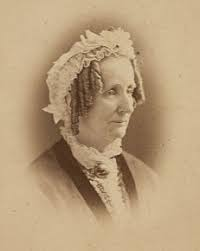
Behind one of the most colorful and extraordinary lives in American history stood a quiet, steady woman who asked for nothing and gave everything. Charity Hallett was the first wife of Phineas Taylor Barnum, the legendary showman, businessman, and founder of one of the greatest circuses the world has ever seen. While her husband dazzled millions with spectacle and showmanship, Charity lived a life rooted in simplicity, devotion, and genuine human goodness.
Most people who know P.T. Barnum through history books, museum exhibits, or the popular film The Greatest Showman know very little about Charity. She did not seek attention or recognition. Yet her story is one of the most genuinely inspiring connected to Barnum’s world precisely because of how different it is from the glittering circus that surrounded her.
In this article, we cover the complete story of Charity Hallett. You will learn about her early life in Connecticut, her work as a seamstress, her 44-year marriage to P.T. Barnum, the children she raised, the life she built, and the controversial circumstances of her death.
Who Was Charity Hallett? A Clear Introduction
A Woman of Simple Virtue in an Extraordinary World
Charity Hallett was born on October 28, 1808, in Bethel, Connecticut, a small and quiet town very different from the spectacular world her future husband would create. She was the daughter of Benjamin Wright Hallett and Hannah Sturges Hallett, two ordinary Connecticut residents who raised their family with modest means and strong personal values.
She grew up in a time and place where women had very limited choices in life. The early nineteenth century in rural Connecticut offered little formal education or professional opportunity for women. Charity fulfilled all those expectations admirably, with a genuine warmth and kindness that earned her lasting respect from everyone who knew her.
Furthermore, what makes Charity Hallett truly remarkable is not what she achieved in public but what she sustained in private. For 44 years, she was the grounding force behind a man whose personality, ambitions, and public persona were anything but quiet. That steadiness, maintained across decades of financial ups and downs, public triumphs, personal losses, and the constant demands of a famous husband’s career, tells us everything about her character.
Her Nickname and Personal Identity
Those who knew her well called her Chairy rather than Charity. Her obituary in the Fairfield Evening Post praised her specifically for her unassuming charities and for the domestic virtues which adorn the character of wife and mother. That description, written at the time of her death, captures her essence more clearly than any modern biography could. She was simply a good person who lived a good life.
Charity Hallett Personal Attributes Table
| Attribute | Details |
|---|---|
| Full Name | Charity Hallett Barnum |
| Nickname | Chairy |
| Date of Birth | October 28, 1808 |
| Date of Death | November 19, 1873 |
| Age at Death | 65 Years Old |
| Birthplace | Bethel, Connecticut, USA |
| Nationality | American |
| Father | Benjamin Wright Hallett |
| Mother | Hannah Sturges Hallett |
| Occupation Before Marriage | Seamstress and Tailoress |
| Marriage Date | November 8, 1829 |
| Husband | Phineas Taylor Barnum (P.T. Barnum) |
| Duration of Marriage | 44 Years |
| Children | Four daughters |
| Burial Location | Mountain Grove Cemetery, Bridgeport, Connecticut |
| Religion | Protestant Christian |
| Known For | Devotion, domestic virtue, quiet charity, and unassuming kindness |
| Era | Early to mid 19th century American history |
| Age When Married | 21 Years Old |
| Portrayed In Film | The Greatest Showman (2017) by Michelle Williams |
Charity Hallett’s Early Life and Background
Growing Up in Bethel, Connecticut
Bethel, Connecticut in the early nineteenth century was a working community defined by agriculture, small trades, and tight-knit family life.
Charity grew up in this environment and absorbed its values completely. Her parents raised her to value honesty, hard work, family loyalty, and quiet service to others. These were not abstract ideals but practical daily habits that shaped her entire character. Furthermore, growing up without significant wealth or privilege gave her a realistic and grounded perspective on life that would serve her well during the many financial difficulties her husband faced in later years.
Life in early nineteenth century Connecticut was genuinely hard for women. There were no career paths, no professional opportunities, and very little formal education available.
Her Work as a Seamstress
Before her marriage, Charity Hallett worked as a seamstress and tailoress in Bethel. This was honest, skilled, and demanding work that required patience, precision, and a steady hand. Making and repairing clothing by hand in the early 1800s was not simple work. It required genuine craftsmanship and the ability to sit quietly for long hours producing careful, detailed work.
That professional background tells us a great deal about who Charity was as a person. She was not someone who sought excitement or attention. She was someone who valued purposeful, skilled work done well and done quietly. Furthermore, as a working woman in early nineteenth century America, she had developed an independence and self-sufficiency that was relatively uncommon for women of her time and place.
Her work as a seamstress was also likely the context in which she first came to the attention of a young Phineas Taylor Barnum, who was himself learning the world of trade and commerce in their shared community during those same early years.
How Charity Hallett Met P.T. Barnum
Two Young People from the Same Small Town
There was nothing spectacular about their beginning. There was no famous name, no circus, no fortune, and no public attention surrounding either of them when they found each other. They were simply two young people from Bethel, Connecticut, drawn together by genuine personal connection in the most ordinary circumstances imaginable.
P.T. Barnum was working in trade and beginning to develop his entrepreneurial instincts when he and Charity became seriously involved. He was younger than her by approximately two years. Furthermore, in the summer of 1829, Barnum asked Charity for her hand in marriage.
The Wedding in November 1829
The wedding of Charity Hallett and Phineas Taylor Barnum took place on November 8, 1829, in New York City rather than their home community. In a somewhat romantic detail, Charity traveled to New York ostensibly to visit her uncle Nathan Beers, who lived at Number 3 Allen Street. Barnum followed a month later, claiming the need to purchase goods for his store. The evening after his arrival, they were married by Reverend Doctor McAuley in the presence of friends and relatives.
Barnum himself later wrote about that wedding day with genuine warmth. In his own words, he became on that day the husband of one of the best women in the world. That description, written by a man not known for understatement, is a powerful tribute to the woman he married. It is also a description he appears to have genuinely meant at the time, even if his later behavior sometimes suggested otherwise.
Charity was 21 years old when she married. Barnum was 19. They were both very young, and they were both at the very beginning of lives that would take very different shapes over the following decades.
Charity Hallett’s Marriage to P.T. Barnum
The Early Years Together
Barnum was still developing his business interests and had not yet discovered his extraordinary talent for showmanship and public entertainment. During those early years, Charity was a practical and steady partner who managed the household and provided the domestic stability that allowed him to pursue his ambitions.
Barnum had described his time before marriage as one of close application to business, suggesting that Charity provided him with the personal grounding he needed to focus. She was not a passive presence in his life. She was an active and essential one.
Together they settled into married life in Connecticut before Barnum’s growing ambitions eventually drew them toward New York and the wider entertainment world that would define his legacy.
Surviving Financial Difficulties
One of the most important contributions Charity made to the Barnum marriage was her steadiness during periods of genuine financial crisis. P.T. Her entrepreneurial career was marked by spectacular successes but also by serious financial failures. At various points, his ventures collapsed under debt and his family faced significant economic hardship.
Throughout those difficult periods, Charity maintained the household with calm and resourcefulness. Her background as a practical working woman from a modest family had prepared her well for managing difficulty without panic. Moreover, her emotional steadiness during the hard times gave Barnum the personal foundation he needed to recover and rebuild each time his fortunes collapsed.
That kind of quiet, practical support is rarely celebrated in history but it is absolutely essential to the story of how P.T. Barnum survived and recovered from his many setbacks to eventually build one of the most remarkable entertainment empires of the nineteenth century.
Charity Hallett Marriage Attributes Table
| Attribute | Details |
|---|---|
| Marriage Date | November 8, 1829 |
| Wedding Location | Number 3 Allen Street, New York City |
| Officiant | Reverend Doctor McAuley |
| Duration of Marriage | 44 Years (1829 to 1873) |
| Barnum’s Age at Marriage | 19 Years Old |
| Charity’s Age at Marriage | 21 Years Old |
| Barnum’s Description of Charity | Called her one of the best women in the world |
| Number of Children | Four daughters |
| Living Children | Three daughters survived to adulthood |
| Child Who Died Young | Frances Irena Barnum, died before age two |
| Charity’s Role in Marriage | Household manager, mother, emotional anchor |
| Financial Challenges Survived | Multiple business failures and recoveries |
| Barnum’s Second Wife | Nancy Fish, married in 1874 aged 24 |
| Time Between Charity’s Death and Remarriage | Less than one year |
| Funeral Controversy | Barnum did not attend Charity’s funeral |
Charity Hallett’s Children and Family Life
Four Daughters and One Great Loss
Charity Hallett and P.T. Barnum had four children together, all daughters. Their names were Caroline Cornelia Barnum, born in 1833; Helen Maria Barnum, born in 1840; Frances Irena Barnum, born in 1842; and Pauline Taylor Barnum, born in 1846.
The loss of Frances Irena before she reached her second birthday was a grief that any parent of any era would recognize as one of the deepest possible human sorrows. Child mortality in the nineteenth century was tragically common, but that familiarity never made individual losses any less devastating. Charity carried that grief alongside the demands of raising her three surviving daughters and supporting her husband’s increasingly public and demanding career.
Furthermore, raising children as the wife of P.T. Barnum meant managing a household that was frequently disrupted by his travels, his financial crises, his public controversies, and his growing fame. The stability that Caroline, Helen, and Pauline experienced in their childhoods came primarily from their mother rather than their father, whose attention was constantly pulled outward toward the next grand project or public adventure.
Her Role as the Family’s Foundation
Charity Hallett’s role within the Barnum family was not glamorous. It was essential. Charity hallett was the person who kept the household functioning during her husband’s long absences. Charity hallett was the person who raised three daughters to adulthood. She was the person who maintained the domestic environment that Barnum returned to between his spectacular public ventures.
Moreover, she did all of this without complaint and without seeking recognition. Historical records contain no accounts of Charity making public demands, giving interviews, or asking for credit for her contributions to the family. She simply did the work of her life with patience, skill, and a genuine love for her family.
Her three surviving daughters all lived into adulthood and established their own families. Caroline lived until 1911. Helen lived until 1915. Pauline, the youngest, passed away in 1877, just four years after her mother. Each of those lives was shaped significantly by the values and the stability that Charity had provided during their formative years.
Life Inside the Barnum World
Living with a Showman
Living with P.T. Barnum was not a quiet experience. He was a man of enormous energy, restless ambition, and an almost unlimited capacity for publicity and spectacle. His career took him from Connecticut to New York to London and back again. He promoted Jenny Lind’s American concert tour, exhibited General Tom Thumb to audiences including Queen Victoria, founded and managed his famous museum, and eventually created the circus that bears his name.
Throughout all of that, Charity remained at home. She did not accompany him on his many tours and adventures. She did not become a public figure by association with his fame. Instead, she maintained the home, the household, and the family life that existed quietly in the background of all his noise.
Furthermore, Barnum’s career involved constant controversy and occasional scandal. His exhibitions sometimes raised ethical questions that his contemporaries debated loudly. His business practices attracted criticism alongside admiration. Through all of it, Charity’s own reputation remained entirely unsullied. Her obituary’s reference to her unassuming charities suggests that she actively gave back to her community in quiet ways that had nothing to do with her husband’s public world.
Her Charitable Nature and Community Reputation
The description of Charity in her death notice as someone known for her unassuming charities is one of the most revealing pieces of information we have about who she actually was as a person. Unassuming charities means charitable acts done without seeking recognition or credit. It is the description of someone who helped others because they genuinely wanted to, not because they wanted to be seen doing so.
In a world where her husband made his entire career out of being seen, this quality in Charity stands as a beautiful contrast. She gave quietly and privately, in the same spirit in which she had lived her entire life. As a result, the community that surrounded her genuinely respected and admired her for who she was rather than for who she was married to.
The Death of Charity Hallett
Her Final Years and Passing
Charity Hallett Barnum died on November 19, 1873, at the age of 65. By this point she and Barnum had been married for 44 years, a remarkable duration by any standard, and had survived together the full arc of his extraordinary and tumultuous career.
The circumstances of her final years are not extensively documented, which is consistent with the private nature she maintained throughout her life. What is known is that her death was mourned deeply by the community around her. Her funeral in Bridgeport, Connecticut drew many prominent citizens and friends who came to pay their respects to a woman they genuinely valued.
Her remains were brought to Waldemere, one of the Barnum family homes in Bridgeport, where the funeral services were held. The house was described as filled with relatives and friends who came to render the last sad tribute of affection and respect. That description of a house full of mourners speaks powerfully about how deeply she was loved by the people who knew her.
The Controversy of Barnum’s Absence
Perhaps the most disturbing detail surrounding the death of Charity Hallett is the fact that P.T. Barnum did not attend her funeral. Historical reports indicate that at the time of his wife’s burial, Barnum was in Southport, Connecticut in the company of Nancy Fish and her father.
Nancy Fish was a young woman who would become Barnum’s second wife less than a year after Charity’s death. In 1874, just months after Charity was laid to rest, Barnum married Nancy Fish, who was 24 years old at the time while Barnum was 64. The suggestion that Barnum may have developed a close relationship with Nancy Fish even before Charity passed away cast a deeply uncomfortable shadow over his personal legacy.
His absence from the funeral of the woman he had called one of the best women in the world, and the speed of his remarriage to a woman less than a third of his age, remain among the most controversial aspects of his personal history. It is a story that many who celebrate P.T. Barnum’s professional genius find difficult to reconcile with any positive view of his character as a husband.
What Her Death Notice Said About Her Character
The notice published at the time of her death in the Fairfield Evening Post praised her specifically for her unassuming charities and for the domestic virtues which adorn the character of wife and mother. In an era when women were frequently defined entirely by their relationship to their husbands, the fact that her death notice chose to praise her for her own individual qualities rather than simply for being Barnum’s wife is significant and meaningful.
Furthermore, those specific words tell us that her community saw and valued the real Charity Hallett as an individual of genuine moral character. Charity unassuming charities were noticed. Her domestic virtues were respected. Her character was acknowledged as something that adorned rather than merely reflected the roles she filled.
Charity Hallett’s Legacy Attributes Table
| Attribute | Details |
|---|---|
| Death Date | November 19, 1873 |
| Age at Death | 65 Years Old |
| Burial Location | Mountain Grove Cemetery, Bridgeport, Connecticut |
| Funeral Location | Waldemere, Bridgeport, Connecticut |
| Death Notice Description | Praised for unassuming charities and domestic virtues |
| Barnum at Funeral | Not present, reportedly in Southport with Nancy Fish |
| Barnum’s Remarriage | Married Nancy Fish in 1874, less than one year later |
| Nancy Fish’s Age at Marriage | 24 Years Old (Barnum was 64) |
| Film Portrayal | Michelle Williams in The Greatest Showman (2017) |
| Historical Legacy | Symbol of quiet devotion and domestic virtue |
| Surviving Children at Death | Two daughters, Caroline and Helen (Pauline died 1877) |
| Years Remembered | More than 150 years after her death, still widely discussed |
| Key Virtue Remembered For | Unassuming generosity and steadfast loyalty |
| Controversy Surrounding Death | Husband’s absence and rapid remarriage |
Charity Hallett in Popular Culture
The Greatest Showman and Michelle Williams
Most people who know anything about Charity Hallett today encountered her through the 2017 musical film The Greatest Showman, in which she was portrayed by Michelle Williams alongside Hugh Jackman as P.T. Barnum. The film was a romanticized and largely fictionalized account of Barnum’s life and career, and its portrayal of the Barnum marriage followed that same pattern.
In the film, Charity is shown as a loving and supportive wife who stands by her husband through his ambitions and his mistakes, eventually reuniting with him after a period of estrangement. The film’s treatment of their relationship is broadly sympathetic to both characters and emphasizes the love and partnership between them.
However, it is important to understand that The Greatest Showman is entertainment rather than history. Many significant aspects of the real Barnum story, including the more troubling details of his character and the circumstances of Charity’s death and his rapid remarriage, are absent from the film entirely. The real Charity Hallett was a more complex and more genuinely admirable figure than any film version of her life has fully captured.
Why Charity Hallett Deserves More Recognition
Despite the renewed public interest in her story sparked by The Greatest Showman, Charity Hallett remains relatively unknown compared to her famous husband. This imbalance is a familiar pattern in history, where the quieter lives of women who supported famous men tend to be overshadowed by the spectacle those men created.
In reality, Charity Hallett’s story deserves to stand entirely on its own terms. Charity was a hardworking, skilled, and genuinely charitable woman who built a life of real meaning and real virtue over 65 years. Charity raised three daughters to adulthood in challenging circumstances. She managed a household through significant financial crises. She maintained her own good reputation and community standing entirely independently of her husband’s fame.
Furthermore, she did all of this while being married to one of the most demanding, restless, and publicly consuming personalities of her era. That achievement, sustained over 44 years of marriage, is itself a form of remarkable resilience.
Charity Hallett: 10 Frequently Asked Questions
Who was Charity Hallett?
Charity Hallett was an American woman born on October 28, 1808, in Bethel, Connecticut. She is best known as the first wife of legendary showman and circus founder P.T. Barnum. However, she was also a skilled seamstress, a devoted mother of four daughters, and a woman widely respected in her community for her personal virtue, her quiet charitable acts, and her steadfast domestic dedication.
When did Charity Hallett marry P.T. Barnum?
Charity Hallett and Phineas Taylor Barnum married on November 8, 1829, in New York City. The ceremony took place at the home of Charity’s uncle Nathan Beers at Number 3 Allen Street. She was 21 years old at the time, and Barnum was 19. Their marriage lasted 44 years until Charity’s death in 1873.
How many children did Charity Hallett have?
Charity and P.T. Barnum had four daughters together. Their names were Caroline Cornelia Barnum born in 1833, Helen Maria Barnum born in 1840, Frances Irena Barnum born in 1842, and Pauline Taylor Barnum born in 1846. Frances Irena died before reaching her second birthday, which was a profound personal loss for the family.
What did Charity Hallett do before her marriage?
Before her marriage to P.T. Barnum, Charity Hallett worked as a seamstress and tailoress in Bethel, Connecticut. This was skilled, patient work that required precision and craftsmanship. Her professional background as a working woman in early nineteenth century America gave her the practical skills and independent character that defined her throughout her life.
What was Charity Hallett known for personally?
Charity Hallett was known for her domestic virtues, her unassuming charitable acts within her community, and her steady and devoted character as a wife and mother. Her death notice in the Fairfield Evening Post specifically praised her for these qualities, noting that her unassuming charities and domestic virtues defined her character and earned her genuine respect from everyone who knew her.
How did Charity Hallett die?
Charity Hallett Barnum died on November 19, 1873, at the age of 65 years old. The specific cause of her death is not clearly documented in widely available historical records. Her funeral was held at Waldemere, the Barnum family home in Bridgeport, Connecticut, and was attended by many prominent citizens and friends from the community.
Did P.T. Barnum attend Charity Hallett’s funeral?
No. Historical reports indicate that P.T. Barnum was not present at Charity Hallett’s funeral. He was reportedly in Southport, Connecticut in the company of Nancy Fish and her father at the time of the burial. Nancy Fish became his second wife less than a year after Charity’s death in 1874, and her presence at his side during his wife’s burial period remains one of the most controversial aspects of his personal history.
Who was P.T. Barnum’s second wife after Charity Hallett?
After Charity Hallett’s death in November 1873, P.T. Barnum married Nancy Fish in 1874. Nancy was the daughter of his close friend John Fish and was 24 years old at the time of the marriage while Barnum was 64 years old. Their 40-year age difference attracted significant public attention and commentary at the time.
How is Charity Hallett portrayed in The Greatest Showman?
In the 2017 musical film The Greatest Showman, Charity Hallett is portrayed by actress Michelle Williams alongside Hugh Jackman as P.T. Barnum. The film presents a romanticized version of the Barnum marriage that emphasizes love, forgiveness, and reunion. However, the film is heavily fictionalized and does not include the more troubling historical details surrounding Barnum’s conduct toward Charity, including his absence from her funeral and his rapid remarriage.
What is Charity Hallett’s lasting legacy?
Charity Hallett’s lasting legacy is that of a woman who lived with genuine virtue and quiet strength throughout one of the most colorful marriages in American history. She represents the countless women of her era whose contributions to family life and community wellbeing went largely unrecorded. Furthermore, renewed interest in her story through popular culture has helped ensure that her name is remembered and that her quiet dignity is finally receiving the recognition it has always deserved.
Final Thoughts: Charity Hallett Deserves to Be Remembered on Her Own Terms
The story of Charity Hallett is ultimately a story about the quiet power of good character. Charity did not seek fame. She did not pursue recognition. She did not try to be anything other than exactly what she was. And what she was, by every historical account available, was genuinely good.
Hallett raised her children with love and care through the financial and personal turbulence of life with a famous and restless husband. She contributed quietly and generously to the community around her. Charity maintained her personal integrity across 44 years of marriage to one of the most publicly complicated personalities of the nineteenth century. And she did all of it without a single complaint on public record.
Furthermore, the contrast between how Charity is remembered and how her husband behaved at the end of her life raises uncomfortable but important questions about gratitude, loyalty, and what it truly means to honor the people who support us. The woman whom Barnum himself called one of the best women in the world deserved better in her final chapter than an empty seat at her own funeral.
Therefore, whether you discovered Charity Hallett through The Greatest Showman, through a history book, or through simple curiosity about the woman behind the famous name, her story deserves to be understood fully and honored honestly. She was not simply P.T. Barnum’s wife. She was Charity Hallett. And that, in the end, is more than enough.
