
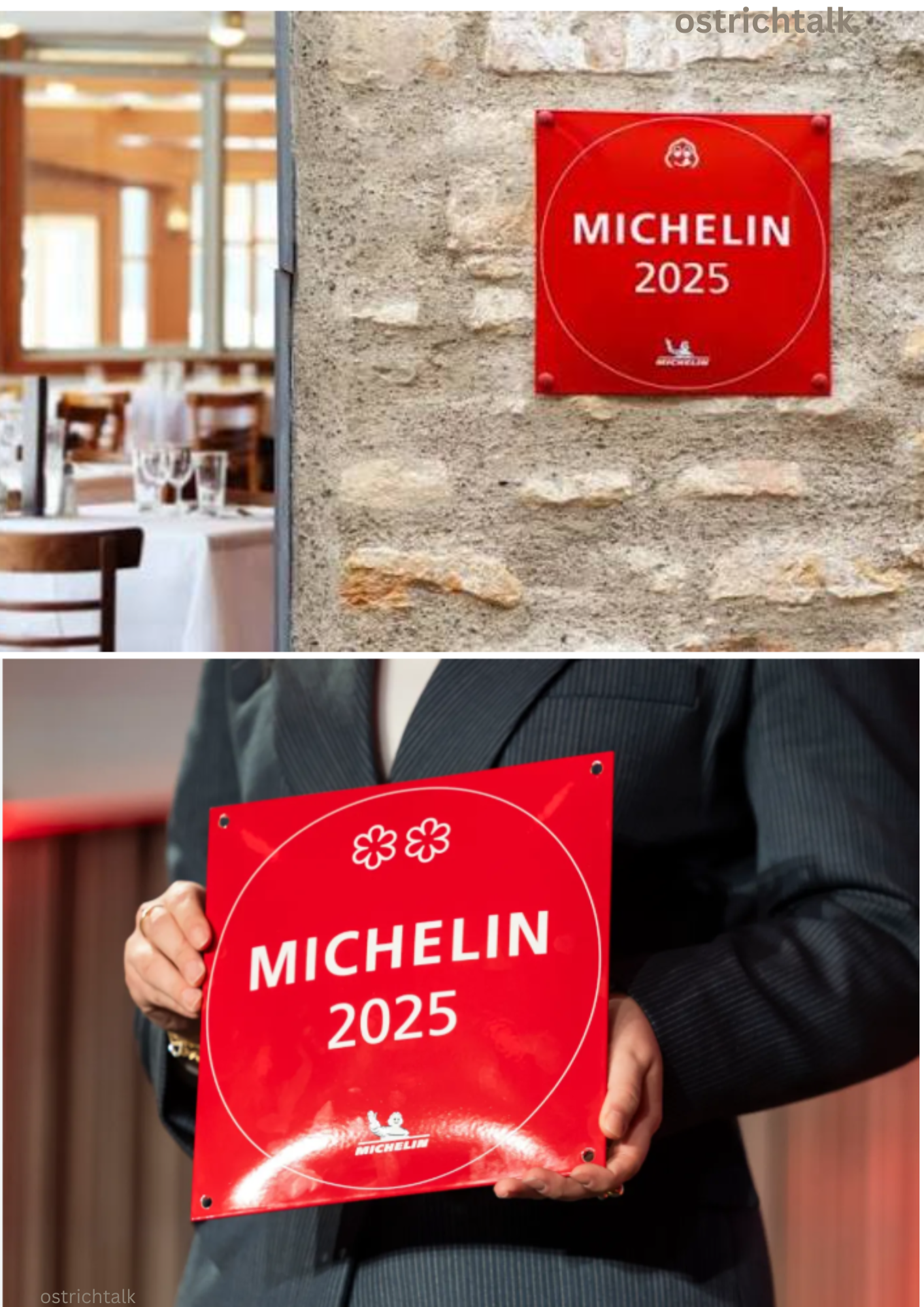
Picture the scene. Peaceful dinning room. A tasting menu comes served on a plate the size of a die-cut hole in the ground. Every bite makes me feel like I’m eating a little miracle. There’s someone around the corner in the room writing notes. One such guest can change a chef’s life. A single mention in a red guidebook will keep a restaurant full for years. No other accolade is as prestigious as a Michelin Star when it comes to food. But still, many people are often wondering what the award means. The following explanation is given in simple terms. History, criteria, 3 levels will be taught. In addition, you’ll find a comparison chart and a helpful FAQ to assist you in your next special meal. Let’s dig in.
But what is a Michelin Star, and where did it come from?
The beginning of the tale is not about truffles, but about tyres. In 1900, the Michelin company released its first guide. At the time, it was looking to get drivers to use their car more so it provided information for mechanics, hotels and restaurants. That meant more tire wear and more sales on road trips! That ingenious marketing strategy morphed into a trusted restaurant expert.
The early editions were far cry from today’s styles. They remained compact and utilitarian, stuffed with maps and information for road users. Soon, however, professional inspectors were hired by the guide and he began to spread beyond borders. Therefore, a regional road companion has turned into a worldwide expert on fine dining. This transition is what’s making chefs across all continents study its standards.
As time went on the guide started to give serious ratings to food. It was pioneered by its inspectors in the 1920s and 1930s, with the star system. The scale was kept to the basics, and it continues to work as it did back then. A star indicates high-quality cooking that warrants stopping to eat, two stars that indicate excellent cooking that warrants a detour and three stars that indicate exceptional cooking that warrants a special journey! Pay attention to the language, as it is about travelling. The guide wants you to cross town – or even a country – for the best meals.
Evaluation Focus, Global Footprint, and Michelin Distinctions
Most importantly, it’s about the food on the plate that is being rewarded. The guide’s service rating (“Cover”) is given for service, ambiance and décor. This means that a simple table that cooks well can get stars, but a beautiful room that lacks the ability to cook well cannot.
The guide has expanded a long way from Europe, too. It now encompasses cities globally, in Asia, North America and the Middle East. Famous starred restaurants are located in Tokyo, Paris and New York. There were 659 starred restaurants in France in the 2026 edition. In the same edition, there were 16 three-star restaurants in the United States. The numbers change annually; refer to the official site for the latest numbers.
The guide gives other marks other than the stars. Launched in 1997, Bib Gourmand is a celebration of restaurants who offer outstanding cuisine at an affordable price. A Green Star identifies restaurants that have sustainable practices. Also, the guide includes a large number of the recommended restaurants, which are not starred. These additional features are for those that desire quality, but not a lot of money.
The Michelin star ratings are awarded by inspectors
As they say, the process isn’t supposed to be revealed. The stars are given annually by anonymous inspectors. They pay their own bills, and don’t announce themselves. Staff are not generally aware that a reviewer is close by. Hence, restaurants are unable to prepare a special show for them. They need to prepare a good meal each night.
Inspectors judge five consistent criteria. They use them in every country, irrespective of food or budget.
- Quality of ingredients. Quality produce, fish and meat are the key to great cooking.
- Mastery of technique. Cooking skills require a lot of finesse from the chef when it comes to temperature, texture and timing.
- Harmony of flavors. All dishes should be well-rounded and intentional.
- Level of the chef’s skills. The food ought to say something and voice a point of view.
- Consistency. Quality will be maintained on all visits and all menu.
There is also a wide range of dishes checked by inspectors so they are able to sample the full range of the menu. They don’t have just one signature plate. Moreover, the same quality standards are used everywhere, and thus a kitchen in Tokyo is tested the same way as one in Lyon. That common standard enables people to compare restaurants in the city and country with assurance.
Maintaining Standards, Deliberation, and Guide Independence
Understand that consistency is important. One dish that can be prepared by anybody. But a starred kitchen has to be as good on a brisk Saturday morning as it is on a lazy Tuesday afternoon. Inspectors do not therefore return several times before reaching a verdict.
So, the argument comes next. Inspectors teams meet to discuss each restaurant and share their notes. Only if inspectors agree do they award a star in the guide. This group method takes away personal bias, though there is some doubt about how subjective food can be. Nevertheless, the approach ensures that the guide is fairly regarded.
The review doesn’t end there either. Restaurants are re-inspected annually. As a result, a kitchen may earn, lose or retain stars. When a restaurant hires a new chef, they can end up losing a lot of money if they don’t get it right.If a restaurant hires a new chef, they can lose a lot of money if it’s not the right one or if the menu is not as strong. Le Chabichou, for instance, in Courchevel, which was two stars on the 2026 French list, has now slipped to one. This change indicates the dynamics of the situation.
Last but not least, keep in mind that restaurants don’t apply for and pay for stars. The location of inspection is determined by the inspectors. There is no award for a chef and no publicist can talk his way into the guide. The independence guards the credibility of the guide.
Michelin Star Levels Compared: One, Two, and Three
Differences cannot just be attributed to numbers. Each level is compared with one another in the table below so you can pick the one that’s appropriate for your budget and event.
| Michelin Star Level | Official Meaning | Typical Experience | Best For |
| One star | A very good restaurant | Polished cooking, often a set menu or short à la carte list | A treat dinner or a first fine-dining visit |
| Two stars | Excellent cooking, worth a detour | Creative dishes, strong service, and a refined setting | Anniversaries and food-focused trips |
| Three stars | Exceptional cuisine, worth a special journey | A fully crafted event with standout technique and service | Once-in-a-lifetime celebrations |
| Bib Gourmand | Good food at reasonable prices | Casual, friendly, and affordable | Weeknight meals and budget travelers |
| Green Star | Leadership in sustainable dining | Seasonal, local, and low-waste menus | Eco-minded diners |
Star Expectations, Budgeting Strategies, and Smart Dining
Examine the pattern. The more up the ladder the more it’s demanding of the kitchen. Additionally, the cost tends to increase with each level, though there are exceptions to this rule. The three-star restaurants still are hard to come by. According to one source, the world’s total is a little over 130, so it’s important to plan in order to get a seat.
Also, notice that the Bib Gourmand and Green Star are not included in the three-star rating system. They praise various abilities. In this case, consider them as added value tools when choosing a restaurant. There’s a lot of joy to be had for a fraction of the price at a Bib Gourmand place.
Location is another factor that influences price. The three-star dinner in a big city can be more expensive than the one-star lunch in a smaller city. All of these are factors, including the cost of currency, local wages, and the cost of ingredients. So, be sure to check menus first, and try to find set lunches or midweek specials. Just a little research can make your meal even better while keeping your budget intact. Check the restaurant’s website for the latest prices.
There is one more thing that is important. The star rating is about the cooking, not your personal taste. If you’re looking for comfort food, a two-star restaurant may not be the best choice. Therefore, before you make a booking, read the reviews and the menu.
But is a Michelin Star worth the dollars? Tips for Diners
Casual meals are less expensive than a starred meal, so let’s be honest about the value.
Why it might be worthwhile. This is the first of several reasons.This is the first of several reasons. Second, many innovative ideas are presented that are not replicable at home. Third, the service may have a warm and accurate feel. Additionally, a special meal builds memories that last nearly forever. This is a way for many people to mark a milestone in life that they have been saving for for a number of years.
Why it may not be. Tasting menus can be tedious and formal to some guests. Some don’t like small servings. Also, the bill will escalate rapidly after drinks are delivered and when service is served. A starred dinner may not be the right choice for those who like a casual and hearty meal.
Most problems are solved by smart planning. The following are tips to ensure the best experience:
- Book early. Popular restaurants book up weeks or months ahead. Find out the reservation dates and schedule a reminder.
- Try lunch. A number of kitchens have shorter or lower cost menus in the middle of the day. Taste the same cooking – at half the price!
- Provide information about diet before meals. Allergies and restrictions must be given to chefs as they plan carefully.
- Read the dress code. Depending on the rules, casual or jackets are required. A brief email avoids embarrassing situations.
- Set a budget. Before sitting down, determine the amount you wish to spend on a wine pairing.
- Come ready to learn and eat. The open-mindedness is rewarded with tasting menus.
Also, try to take smaller steps initially. Start at a Bib Gourmand restaurant or obtain a 1-star restaurant meal. Then move up if you enjoy the experience! It is a route that allows you to learn what you like without taking a lot of risk.
If a restaurant provides a ‘New York’ menu, order something à la carte. A shorter order will reduce the cost, and still you’ll savor the prowess of the kitchen. Similarly, inquire after vegetarian dishes or seasonal fare, as many cooks are at their best with vegetables. Be sure to review the official guide site prior to embarking on your trip, as menus, prices and ratings vary frequently.
Lastly, Take it easy. Turn off the phone for a couple of minutes. Inquire, as staff enjoy talking about their dishes. Eating is better appreciated when you pay attention to it.
The Pressure Behind a Michelin Star
Elegant plates are the cover for a lot of pressure. One star can make a huge difference in a small restaurant. There are more bookings, more calls, and the pressure to be perfect begins. As a result, many chefs are proud and scared.
Stars require resources in the form of money and personnel. Large teams are usually used in starred kitchens. They use high quality ingredients and invest in training. Meanwhile, costs are continuing to increase all year long – from rent to wages. The restaurant can earn praise and it can turn a profit. This tension is a shock to many fans of the guide.
In fact, some chefs have left the system behind. French chef Sébastien Bras is no exception to the rule that everyone is afraid of a three-star rating, and has been removed from the guide after stating that it was causing him psychological stress. His decision began a discussion on mental illness in the professional kitchen. Some have lost a star and then have a restaurant that is more laid back. In both instances, chefs define success in various ways.
Economic Influence, Guide Inclusivity, and the True Value of Food
There’s more to the ripple effects than in the kitchen. A new star can attract tourist attention to a small town, and local farmers, fishers and winemakers can prosper. Hotels are full, shops are lively and neighbors are cozy. Sure, however, there may be a downside of sudden fame: regulars tend to be driven out by the rent hikes. Thus, many communities receive the attention with mixed emotions.
There are other criticisms. One critic has suggested that the guide is more a guide to formal, European food. Others argue that it fails to include street food and home cooking. The guide has expanded to address this, however. It now includes a variety of cuisines around the world and less formal venues, such as humble stalls in Asia. Discussions are ongoing, but progress is going on.
That means, the key is balance. Respect the guide, but don’t consider it as the only standard of quality. The best way to break your heart is by a neighborhood bistro without any award. Similarly, if a restaurant is starred and it’s not up to your standards, it’s not a good meal. Remember the rule of taste first.
Conclusions on the Michelin Star
For all intents and purposes, one Michelin Star is still one of the most coveted in the restaurant industry. It was originally a travel tool in the tire company, and went on to become a symbol of excellence worldwide. Moreover, it will pay for the best ingredients, the best technique, and the best quality of products. But the award is not an elixir of happiness. It is determined by cost, pressure and personal preference.

In summary: Know the three levels, take the Bib Gourmand and Green Star as convenient shorthand and make your reservations well in advance. Also, do not be afraid to follow your own instincts. The best meals come from people who care about the food, and that’s what you’ll find whether you’re looking for Michelin Star status or just a bowl of noodles that’s perfectly delicious. Then go to a restaurant, reserve a reservation, and sample some delicious food. Pass this guide on to a friend, and then set up the next great table with a friend. It’ll make your taste buds happy. Enjoy. Bon appétit.
Frequently Asked Questions FAQs
Q1: What is a Michelin Star?
A Michelin Star is a rating the Michelin Guide gives to restaurants for outstanding cooking. Anonymous inspectors award one, two, or three stars each year. The rating judges the food on the plate. Service and décor receive separate recognition.
Q2: How many levels does a Michelin Star have?
The rating has three levels. One star means a very good restaurant. Two stars mean excellent cooking worth a detour. Three stars mean exceptional cuisine worth a special journey. The guide does not award four or five stars.
Q3: How does a restaurant earn a Michelin Star?
Inspectors visit anonymously and judge five criteria. They look at ingredient quality, technical skill, flavor harmony, the chef’s personality, and consistency. They award stars after group discussion. Restaurants cannot apply or pay for the honor.
Q4: Can a restaurant lose a Michelin Star?
Yes. Inspectors review restaurants every year, so a kitchen can gain, keep, or lose stars. A drop in quality, a chef change, or inconsistent service can lead to a downgrade. Some restaurants also close or leave the guide on their own.
