
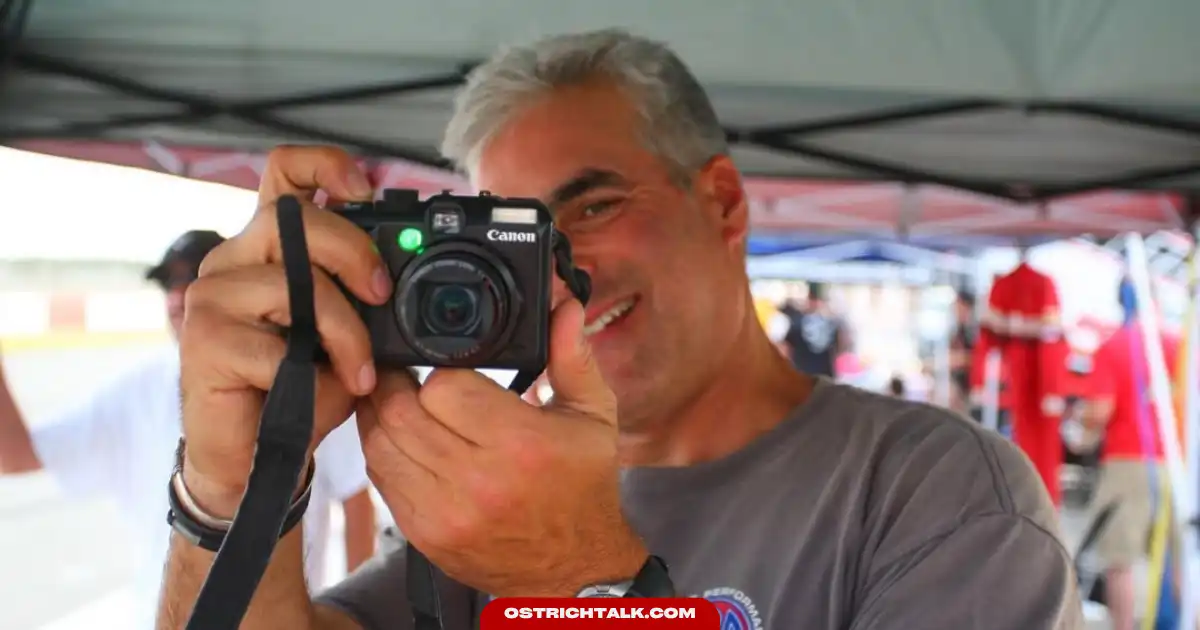
In 1992, a young commercial director named Neil Joseph Tardio Jr. walked into Fahrenheit Films in Santa Monica and received his first major directing assignment. The project was a television special for Madonna tied to the Rock the Vote campaign. When the Peabody Award arrived shortly after, Tardio was 27 years old and had just created one of the most recognized pieces of political media in a generation. Neil did not give interviews about it. Neil did not chase celebrity. He went back to work. That pattern, produce something remarkable, then quietly move on to the next thing, has defined the career of Neil Joseph Tardio Jr. for more than three decades.
Born Into the Business: Rye, New York, and a Father Who Knew the Craft
Neil Joseph Tardio Jr. was born on July 22, 1964, in Rye, New York. He grew up in a household where commercial film production was not an abstract concept. His father, Neil J. Tardio Sr., owned Tardio Productions, a New York-based company that specialized in television commercials. According to The New York Times, the elder Tardio was an established figure in the commercial production industry. Growing up around scripts, cameras, and editing decisions gave his son a working knowledge of the business before he ever enrolled in a class.
His mother, Margaret Tardio, provided the stability and encouragement that balanced out a household centered on professional creative work. Both parents appear to have understood the difference between exposing a child to a craft and pressuring them into it. Tardio Jr. developed genuine interest on his own terms, shaped by what he saw at home but not dictated by it.
He attended Rye Country Day School, a private school in his hometown. His academic record there pointed toward both creative and athletic interests. According to multiple career profiles, he played hockey, soccer, and lacrosse at a competitive level during his school years. He later captained the lacrosse team at Boston University and finished as the team’s top scorer in both his junior and senior years. That combination of creative upbringing and competitive athletic drive formed a profile that would later distinguish his directing style: disciplined, fast-paced, and built around performance under pressure.
After Rye Country Day, he enrolled at Boston University, where he earned a Bachelor of Arts in Film, Cinema, and Video Studies and Communications, graduating in 1986. During his university years, he worked at WBRU Radio and the campus news channel. Those early experiences placed him inside the production process from a practical, not just theoretical, angle. He was not studying film in classrooms alone. He was producing content and learning how media actually moves from an idea to an audience.
Early Career: Agency Work at Saatchi and DDB Before the Camera
After graduating from Boston University, Tardio Jr. began his career on the agency side of advertising. He worked as a writer and producer at Saatchi and Saatchi, one of the most recognized advertising agencies in the world. He then moved to DDB Chicago, another major force in American advertising. Those two positions gave him direct exposure to how large-scale campaigns are conceived, developed, pitched, and executed at the brand level.
Agency work teaches things that the director’s chair cannot. It requires understanding what a client actually needs versus what they say they want. Demands writing that serves a selling function, not just an aesthetic one. Forces a creative professional to defend ideas in rooms full of people who have every financial reason to prefer the safe choice. Tardio spent years developing that skill set before he ever stepped behind a camera as a director.
The transition from agency producer and writer to director is not automatic. Many talented agency creatives never make the jump. Tardio made it in 1992, when he joined Fahrenheit Films in Santa Monica. Fahrenheit was a production company focused on music videos and commercials, precisely the intersection of artistic filmmaking and commercial purpose that his background had prepared him for.

The Peabody Award and the Rock the Vote Campaign
His first major assignment at Fahrenheit Films was the project that established his reputation. Tardio directed the Rock the Vote television special featuring Madonna in 1992. According to his biography on Kids in the House, that project earned the Peabody Award, one of the most prestigious honors in American broadcast media. The Peabody recognizes work that demonstrates integrity, quality, and significant contribution to public understanding. Earning one on a debut directing assignment placed Tardio in a category that most commercial directors never reach at any point in their careers.
Rock the Vote was not simply a celebrity endorsement campaign. It used Madonna’s platform to address voter registration among young Americans during a period of genuine political disengagement in that demographic. The campaign became a cultural reference point for how entertainment and civic engagement could intersect in media. Tardio’s direction made the special work as television, not just as messaging. That distinction mattered because audiences could sense the difference, and audiences showed up.
The Peabody recognition opened doors across every sector of his industry simultaneously. Brands wanted his storytelling sensibility for their commercial work. Music labels wanted his ability to direct talent. Television production companies took his calls. He did not emerge from that moment as a household name, but he emerged as someone that the people who make those decisions knew and trusted.
PE TV, Channel One, and the Children’s Sports Programming Work
Following Rock the Vote, Tardio directed 32 episodes of a children’s sports program called PE TV, which aired first on Channel One and then on ESPN, according to his official biography at Kids in the House. That body of work represents something often overlooked in his career narrative. Directing 32 episodes of programming for young audiences required a different set of skills than directing a prestige television special. It demanded consistency, efficiency, and the ability to make physical activity compelling on screen for viewers who had not yet developed patience for slow storytelling.
Channel One distributed educational news programming directly to schools across the United States, reaching a captive student audience during school hours. Getting and holding that audience required production values and pacing that many adult-oriented productions did not bother with. Tardio understood youth audiences and knew how to direct content that held their attention without condescending to them.
The ESPN run extended that work into a sports-specific context, where he applied the same principles. Those 32 episodes built directing muscles that translated directly into his commercial work, where the challenge is always to tell a compelling story in 30 seconds before the viewer reaches for their remote.
| Career Milestone | Year | Details |
|---|---|---|
| Boston University graduation | 1986 | BA in Film, Cinema, and Video; lacrosse captain |
| Saatchi and Saatchi | 1986–early 1990s | Agency writer and producer |
| DDB Chicago | Early 1990s | Writer and producer |
| Joined Fahrenheit Films | 1992 | First directing role at a production company |
| Rock the Vote (Madonna) | 1992 | Peabody Award winner |
| PE TV (Channel One / ESPN) | 1992–mid 1990s | Directed 32 episodes of children’s sports programming |
| Joint Man campaign | Mid-1990s | Emmy nomination; Partnership for a Drug-Free America |
| Third Street Mining Company | 2000s onward | Founded own production company in Los Angeles |
| Son of Santa screenplay | 2000s | Original script sold to United Artists |
| Lifeisode web series | 2000s | Co-created and directed |
Commercial Directing and the Brand Client Roster
Through the late 1990s and into the 2000s, Tardio built one of the most quietly impressive client rosters in American commercial production. He directed campaigns for Nike, Coca-Cola, McDonald’s, Volkswagen, AT&T, Ford, Porsche, Verizon, Target, Bank of America, Gatorade, Domino’s Pizza, Tim Hortons, and major sports properties including the NFL, NHL, and MLB, according to multiple career profiles.
That list covers virtually every major sector of consumer advertising. Each brand category demands a different tonal register and a different understanding of what the audience expects from the product. A Nike spot needs to make you feel something physical. A Coca-Cola spot needs warmth and nostalgia. A McDonald’s spot needs speed and accessibility. A Porsche spot needs desire and precision. Directing across all of those simultaneously requires genuine range, not just technical facility.
His approach became recognizable across those projects. He developed a signature style built on humor-driven dialogue, quick pacing, sharp casting, and emotional authenticity. He understood that the best 30-second commercial does not feel like a commercial. It feels like a brief, memorable moment from something larger, a scene from a story the viewer wishes they could watch in full.
He also directed music videos for Queen Latifah and the Red Hot Chili Peppers, according to his Kids in the House profile and multiple industry sources. Those projects placed him inside a different creative conversation, one where the director serves the artist’s vision rather than a brand’s marketing objective. His ability to move between those contexts without losing his distinctive voice speaks to the adaptability that sustained his career across multiple shifts in the advertising and media landscape.
The Emmy Nomination and Drug-Free America Work
Alongside the Peabody, Tardio earned an Emmy nomination for his work on the Joint Man campaign, produced for the Partnership for a Drug-Free America. That nomination placed him among the most decorated commercial directors of his generation in terms of recognized public-service work specifically. The Partnership for a Drug-Free America produced some of the most effective anti-drug media in American advertising history. Contributing to that body of work at a level that earned Emmy consideration added a dimension to his career that pure commercial work could not have provided.
Two major recognitions, one Peabody Award and one Emmy nomination, both connected to public service campaigns, tell a specific story about what Tardio valued in his work beyond the client relationship. He gravitated toward projects with genuine cultural stakes. He brought the same craft he applied to major brand campaigns to work intended to change behavior and protect public health. That combination is rare in a director who also maintained an active commercial career throughout.
He also received recognition across the advertising industry’s competitive awards circuit. According to Late Magazine, his career work accumulated four Cannes Lions, four Clio Awards, two London Art Directors Awards, and Effie recognition. The Cannes Lions and Clio Awards represent the highest level of peer recognition in global advertising. Collecting four of each across a career signals sustained excellence rather than a single breakout year.
Third Street Mining Company and Independent Production
At some point in his career, Tardio founded Third Street Mining Company, his own production company based in Los Angeles. The move from directing for other companies to running an independent production entity marks a specific stage in a commercial director’s professional evolution. It requires moving from executing other people’s visions under someone else’s infrastructure to building the infrastructure itself.
Third Street Mining Company gave Tardio control over the projects he took on and the talent he worked with. It also gave him the ability to develop original content, not just respond to client briefs. That independence shaped the later phase of his career, which expanded beyond commercial work into screenwriting and original development.
His original screenplay, Son of Santa, was sold to United Artists, according to his Kids in the House biography. Selling a feature screenplay to a major studio is a meaningful achievement in a town full of unproduced scripts. United Artists has a specific legacy in Hollywood as a studio founded on the principle of creative control for filmmakers, which makes it a fitting home for a project from a director who built his career on exactly that principle.
He also co-created and directed Lifeisode, a web series, according to the same biography. The Lifeisode project placed him at the intersection of traditional commercial narrative and the emerging digital distribution model, an early recognition that the audience for quality short-form content was migrating online.
Marriage to Téa Leoni and the Quiet Divorce
Neil Joseph Tardio Jr. met Téa Leoni in the late 1980s while both were on vacation. According to multiple reports, they met around 1986 and dated for approximately five years before marrying. On June 8, 1991, they wed at St. Luke’s Episcopal Church in Hope Township, New Jersey, according to The Hollywood Reporter. The ceremony was private. The couple kept their marriage largely out of the press throughout its duration.
At the time of their wedding, Téa Leoni’s career was in its early stages. Her breakthrough television role in Flying Blind came in 1992, the year after the wedding, and her film career did not accelerate until the mid-1990s. Neil was already an established figure in commercial production and had just directed Rock the Vote. The marriage brought together two creative professionals at similar career stages, both working in entertainment but on opposite sides of the camera.
Their marriage ended on October 1, 1995, according to Wikipedia’s entry on Téa Leoni. The divorce was handled privately. Neither party gave interviews explaining the split. No children were born during the marriage, which simplified the legal process and reduced any public dimension to the separation. The reasons behind the divorce have never been publicly confirmed by either party. Unverified claims that appeared in some outlets cited a lack of trust, but these were never confirmed by named sources and should be treated as speculation.
Téa Leoni went on to marry actor David Duchovny in 1997, according to Wikipedia. They had two children together and divorced in 2014. She later married actor Tim Daly in 2025. Tardio did not speak publicly about any of these developments and has maintained consistent privacy regarding his personal life throughout the decades since.
Second Marriage and Family in Los Angeles
Neil Joseph Tardio Jr. married Julia Sayre Hine in June 1998. According to Briefly.co.za, which cited The New York Times as its source, Julia had recently left her position as a manager of special marketing at Random House, the New York publishing house, at the time of their wedding. She graduated from Barnard College with honors, earning magna cum laude distinction. The couple settled in Los Angeles, where Tardio continued running Third Street Mining Company.
Neil keeps his personal life private and has not publicly confirmed detailed information about his family as of 2026 beyond what appears in credible named sources. Multiple reports indicate the couple has two children, a son named Max and a daughter named Charlie, though these details have not been confirmed by named major publications and are noted here as estimates only.
The contrast between his private family life and his professional output is deliberate and consistent. Tardio has never used his connection to a recognizable actress to generate attention for himself or his work. He has never appeared in entertainment news coverage in the years since his divorce. His professional biography, available through Kids in the House and other industry resources, focuses entirely on his creative output.
What Three Decades Behind the Camera Actually Built
Evaluating Neil Joseph Tardio Jr.’s career requires resisting the instinct to frame it through his most recognizable connection. He is not primarily the man who was once married to Téa Leoni. He is a director who earned a Peabody Award on his first major assignment, accumulated a client roster that includes nearly every major American consumer brand, received Emmy nomination recognition for public service work, and built an independent production company that survived every structural shift the advertising industry went through between 1992 and the present.
The advertising industry changed dramatically during the years he worked in it. The 30-second television spot lost its dominant position as streaming, social media, and digital platforms fragmented the audience. Production companies that could not adapt to those changes lost their client relationships. Tardio adapted. Third Street Mining Company’s evolution from traditional commercial production toward original content development reflects exactly the kind of forward-looking response that sustained careers in that environment require.
His decision to pursue original screenwriting, sell a feature to United Artists, develop a web series, and explore children’s books alongside his commercial work shows a creative professional who never allowed himself to be defined entirely by one format. That range is not incidental to his longevity. It is the reason for it.
Furthermore, the consistent quality signaled by four Cannes Lions across a career of more than 100 directed commercials places him in a very specific tier of the industry. The Cannes Lions competition draws entries from production companies worldwide. Winning once reflects strong work. Winning four times reflects a consistent standard that peers and industry judges recognize as exceptional.
Frequently Asked Questions
Who is Neil Joseph Tardio Jr.?
Neil Joseph Tardio Jr. is an American commercial director, producer, and screenwriter born on July 22, 1964, in Rye, New York. He is best known professionally for winning the Peabody Award for his direction of Madonna’s 1992 Rock the Vote television special, and for directing more than 100 commercials for major brands including Nike, Coca-Cola, and McDonald’s. He is also known as the first husband of actress Téa Leoni.
Did Neil Joseph Tardio Jr. win a Peabody Award?
Yes. According to his official biography at Kids in the House, Tardio won the Peabody Award in 1992 for directing the Rock the Vote television special featuring Madonna. The Peabody Award is one of the highest honors in American broadcast media. He also received an Emmy nomination for the Joint Man anti-drug campaign produced for the Partnership for a Drug-Free America.
Why did Neil Joseph Tardio Jr. and Téa Leoni divorce?
The specific reasons behind their 1995 divorce were never publicly confirmed by either party. According to The Hollywood Reporter, they married on June 8, 1991, at St. Luke’s Episcopal Church in Hope Township, New Jersey, and their divorce was finalized on October 1, 1995. Neither Neil nor Téa gave interviews explaining the split, and any claims about the reasons remain unverified.
Is Neil Joseph Tardio Jr. still working as a director?
Yes. Tardio continues to operate Third Street Mining Company, his Los Angeles-based production company. Multiple sources indicate he remains active in directing and is also developing original projects including a feature film and children’s books, though specific release details have not been confirmed by named major publications as of June 2026.
Read about Chris Brooks
