
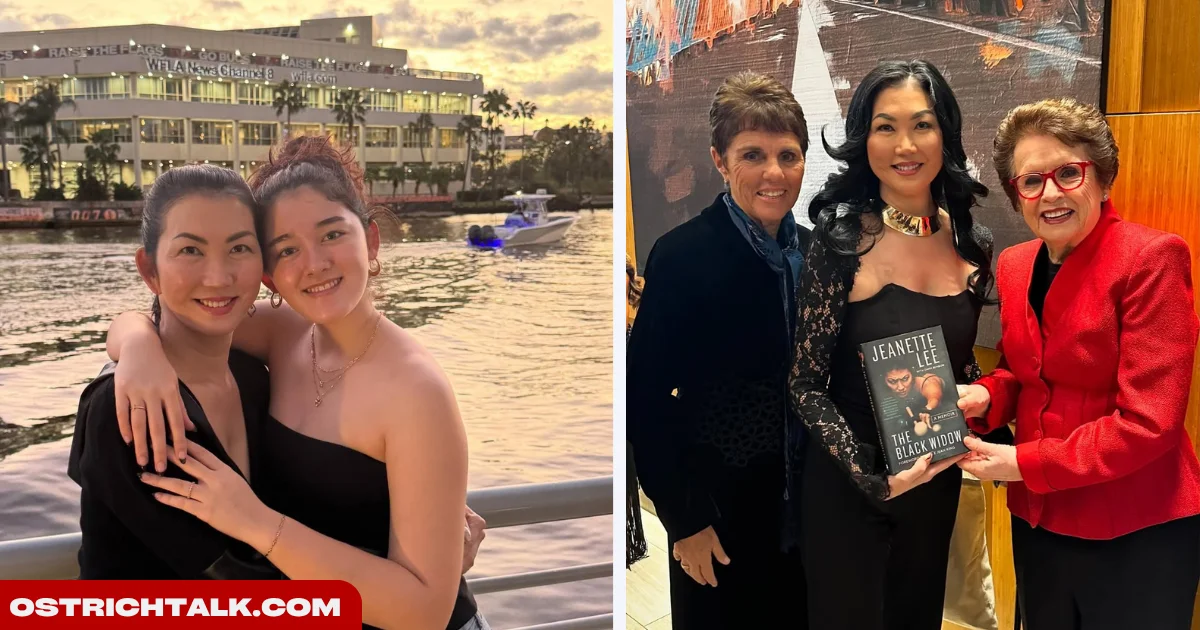
In May 2022, Jeanette Lee shared news that stunned her supporters: her chemotherapy treatments for stage IV ovarian cancer had been declared successful. Doctors had given her months to live just over a year earlier. She survived. That resilience, applied to a career spanning over three decades of professional billiards, an ESPN 30 for 30 documentary, a published memoir, and a brand recognized worldwide, tells you nearly everything about why her estimated net worth stands at $5 million today. The Black Widow never lost at anything she genuinely decided to fight for.
Born Lee Jin-Hee on July 9, 1971, in Brooklyn, New York, to Korean immigrant parents, she grew up far removed from the glamour of professional sports. Her path to becoming the most recognizable female pool player in history was neither straight nor simple. Scoliosis diagnosed in childhood, more than twenty surgeries, poverty, and a sport that barely paid its female competitors in the early years all stood between her and the financial success she eventually built. Understanding Jeanette Lee net worth means understanding all of it.

From Brooklyn to the Billiard Hall: The Origin Story
Jeanette Lee grew up in a working-class Korean-American household in Brooklyn, New York. Her introduction to billiards came at age 18, when she walked into a Manhattan pool hall one evening. The geometry of the game captivated her immediately. Within a short period, she was competing in local tournaments.
Turning Professional and the Early WPBA Years
Lee turned professional at 21. Her early career on the Women’s Professional Billiard Association (WPBA) circuit produced immediate results. She earned the WPBA Player of the Year award in 1994, just three years after turning professional. That recognition was not honorary. It reflected a level of competitive dominance that her peers had no immediate answer for.
The nickname “Black Widow” followed her from a New York pool room. It was a label assigned because she would, as she later told ESPN, “eat people alive” at the table. In a sport that struggled for mainstream identity, she arrived with one fully formed.
The Physical Reality Behind the Competitive Success
What makes her early competitive rise even more significant is the physical context in which it happened. Scoliosis, a painful curvature of the spine, had affected her since childhood and required surgery.

The ESPN Era and the Making of a Sports Icon
She was not simply a pool player who happened to be on television. She was a genuine sports personality in an era when female athletes rarely received that kind of mainstream platform.
Television Appearances Beyond the Pool Table
Her visibility extended well beyond tournament coverage. Lee appeared in an ESPN SportsCenter commercial, which placed her alongside the network’s most recognizable athlete partnerships. Lee was featured in ESPN Magazine’s “The Body” issue, a significant mainstream media placement. She made a cameo in the Disney film “The Other Sister.” Lee also competed as a contestant on South Korea’s version of Dancing with the Stars, reflecting an international profile that few athletes in niche sports ever build.
Each of these appearances served a dual commercial function. They increased her public visibility, which drove endorsement value. They also demonstrated to sponsors that she could carry a brand message to an audience well beyond billiards enthusiasts. That crossover appeal is a rare asset, and it contributed meaningfully to the financial foundation beneath her career earnings.
The Gold Medal and Global Recognition
Her competitive peak included a gold medal performance for the United States at the 2001 World Games in Akita, Japan. According to ESPN, she accumulated more than 30 national and international titles throughout her professional career, including nine-ball titles and trick shot championships. She was named the WPBA Sportsperson of the Year in 1998, a recognition of both her athletic achievement and her contribution to the sport’s growth.
These titles produced direct tournament income and indirectly increased her endorsement value with every milestone. The gold medal in particular elevated her profile internationally, opening commercial opportunities in Asian markets where billiards holds a significantly larger cultural presence than it does in the United States.

Jeanette Lee Net Worth: Breaking Down the Sources
Jeanette Lee’s net worth is estimated by multiple outlets at between $5 million and $7 million, with $5 million being the most consistently cited figure. Her wealth reflects multiple revenue streams accumulated over more than three decades, rather than a single dominant income source.
| Income Source | Details |
|---|---|
| Tournament prize earnings | 30+ national and international titles across WPBA career |
| ESPN broadcast fees and appearance deals | Regular presence on WPBA broadcasts throughout 1990s and 2000s |
| Endorsement and sponsorship deals | Brand partnerships built on crossover mainstream appeal |
| American Poolplayers Association (APA) | Spokesperson since 2009; chapter operator from 2015 |
| Published works | Two books including memoir “Black Widow” (Triumph Books, 2024) |
| Speaking engagements | Keynote speaker represented by AAE Speakers Bureau |
| ESPN 30 for 30 documentary | “Jeanette Lee Vs.” premiered December 2022 |
Tournament Earnings and Their Context
Professional billiards in the 1990s did not offer the prize money structures of mainstream sports. Her 30-plus titles represent more than just career validation.
Endorsements and the Brand Value of “The Black Widow”
The commercial value of a distinctive personal brand is difficult to overstate in professional sports. That kind of long-term partnership provides financial stability in a way that one-off sponsorships cannot replicate.
Scoliosis, the Career Interruption, and Financial Resilience
One of the most significant and underreported dimensions of Jeanette Lee’s financial story is how her career managed to generate and sustain income through periods of serious physical limitation. Scoliosis, diagnosed in childhood, required more than twenty operations over the course of her playing career, according to her memoir published by Triumph Books in 2024.
By 2010, the condition had become severe enough to limit her ability to compete at the highest level. Her on-table career essentially ended at a point when many athletes would still have had productive competitive years ahead. The ability to maintain her financial foundation through that transition depended entirely on the brand equity, institutional relationships, and media presence she had built during the years of active competition.
How the APA Role Sustained Her Post-Competition Income
The transition from competitor to operator and ambassador is one that professional athletes navigate with varying degrees of success. Her deep credibility within the billiards world made the transition more natural than it might have been for an athlete without the same decades of established relationship with the sport’s community.

The Cancer Diagnosis, Public Support, and the Legacy Fund
In February 2021, Jeanette Lee announced that she had been diagnosed with stage IV ovarian cancer. According to a statement released through the American Poolplayers Association, her doctors indicated she had a limited time to live. The cancer had metastasized to her lymph nodes. She had already begun chemotherapy when the announcement was made.
The public response was immediate and substantial. According to the Tampa Bay Times, over 3,300 supporters raised $248,105 through a GoFundMe campaign created by family and friends to support her and her three daughters. The “Jeanette Lee Legacy Fund” was established specifically to provide for the care, wellbeing, and education of her daughters Cheyenne, Chloe, and Savannah.
The Statement That Defined Her Response
In her public statement through the APA, Lee said: “I intend to bring the same resolve I brought to the billiards table to this fight.” She invoked the memory of Jim Valvano, the North Carolina State basketball coach who delivered a famous speech about refusing to give up at the 1993 ESPY Awards before his own death from cancer. The statement was not rhetoric. It described exactly what followed.
By May 2022, ESPN reported that her chemotherapy treatments had been declared successful. She had outlasted a prognosis that gave her months. The victory was personal, medical, and also reputational: it added a chapter to her public story that made the subsequent ESPN documentary and memoir inevitable.
The ESPN 30 for 30 Documentary and Its Financial Impact
In December 2022, ESPN aired “Jeanette Lee Vs.” as part of its acclaimed 30 for 30 documentary series. According to ESPN’s press release, the film was directed by Ursula Liang, whose previous credits included “9-Man” and “Down a Dark Stairwell,” and produced by Cora Atkinson. It premiered at the Doc NYC Film Festival on November 12, 2022, before its television debut on December 13 at 8 p.m. ET on ESPN, with immediate availability on ESPN+.
The documentary covered the full arc of her career, from her Brooklyn childhood and scoliosis surgeries through her rise to the No. 1 world ranking, her mainstream crossover fame, her physical decline, and her cancer diagnosis and treatment. According to ESPN’s press room, the film described her as someone who “at her peak became, improbably, one of the most recognizable figures in sports.”

Why the 30 for 30 Matters Financially
A 30 for 30 documentary is more than a retrospective tribute. For an athlete, it functions as a significant commercial event. New audiences discover the subject’s story for the first time. Existing supporters re-engage with the brand. Licensing, speaking, and publishing opportunities emerge from the renewed attention. For Lee, the documentary introduced her to a generation of sports fans who had not been alive during the peak of her career in the 1990s. That expanded audience has commercial value that extends well beyond the broadcast itself.
The film’s availability on ESPN+ ensures that its reach is ongoing rather than limited to the original air date. New viewers continue discovering it through the streaming platform, maintaining a background level of public interest in her story that supports her book sales, speaking engagements, and broader brand presence.
The Memoir and the Business of Storytelling
In August 2024, Triumph Books published “Black Widow: A Memoir” by Jeanette Lee. The book covers her upbringing in a Korean-American household in Brooklyn, her entry into billiards, her rise to the top of the sport, her scoliosis surgeries, and her cancer battle. According to AAE Speakers Bureau, where she is represented as a keynote speaker, the memoir addresses her scoliosis operations and cancer diagnosis alongside her career achievements.
Publishing a memoir at this stage of her life was strategically well-timed. The 30 for 30 documentary had reintroduced her story to a large mainstream audience two years earlier. Her cancer survival had generated significant media coverage. The Asian-American community, whose representation in mainstream sports media had become an active cultural conversation, had a particular stake in her story as one of the most prominent Asian-American athletes in American sports history.
The Billiards Book That Came First
Her earlier book, “The Black Widow’s Guide to Killer Pool: Become the Player to Beat,” was a practical instructional volume aimed at pool players wanting to improve their game. That book served a different commercial function than the memoir. It positioned her as an authority within the billiards community. It continued generating passive income through sales long after its publication date. Together, the two books represent distinct phases of her public brand: first as a dominant competitor sharing her expertise, then as a public figure sharing her life.
Hall of Fame Recognition and What It Means for the Brand
Jeanette Lee was inducted into the Billiard Congress of America Hall of Fame in 2013, according to the BCA. She was also inducted into the Women’s Professional Billiards Association Hall of Fame, with the Tampa Bay Times citing 2012 as the year of that recognition. Her induction into the Asian Hall of Fame reflects the breadth of her cultural significance beyond the sport itself, acknowledging a legacy that extends into questions of representation and visibility in American public life.
Hall of Fame inductions matter to the financial picture of a career in ways that go beyond symbolic recognition. They provide credibility that sustains speaking fees and institutional relationships. They make an athlete a permanent reference point in the sport’s historical narrative, which keeps their name in active circulation across media coverage for decades. Every new article about the greatest female pool players in history will include her name. That ongoing presence in the sport’s record generates a background level of public interest that supports every other commercial activity connected to her brand.
The inductions also create opportunities that would not otherwise exist. Hall of Fame ceremonies generate media coverage, speaking invitations, and institutional connections. They introduce new audiences to a career they may not have followed in real time. For Lee, the BCA Hall of Fame induction in 2013 arrived at a moment when her active competitive career had already been curtailed by scoliosis, making it a timely reinforcement of her professional identity during a period of transition.
Player of the Year and the Billiards Digest Rankings
Lee earned the Billiards Digest Player of the Year award in 1994. She was consistently ranked among the most powerful people in the sport by Billiards Digest across multiple years of her career. Pool and Billiard Magazine’s 2007 fan poll ranked her fourth among the top twenty favorite players, years after scoliosis had already begun limiting her active competition.
That kind of enduring fan affection long after a competitive peak is the clearest possible measure of genuine brand strength. Popularity built purely on current performance fades when the performance stops. Popularity built on authentic connection, on audiences feeling that they know someone and are invested in them as a person, sustains itself through career transitions, health challenges, and the passage of decades. Lee built the second kind. The 2007 ranking, years into her physical decline as a competitor, confirmed it.
The Cultural Significance of Her Career
Any accounting of Jeanette Lee’s net worth that treats it as purely a financial figure misses the larger story. She built financial value partly by occupying a cultural position that no one else in her sport occupied simultaneously: Asian-American, female, mainstream television personality, and dominant competitive athlete.
Women’s billiards had minimal mainstream visibility before her ESPN appearances. Her presence on national television during the 1990s changed the sport’s audience profile, drawing viewers who would not otherwise have watched pool on any given evening. She demonstrated to a generation of young women, and particularly to young Asian-American women, that elite professional athletics was accessible to them regardless of background, ethnicity, or the obstacles their bodies created.
That cultural function does not appear on a balance sheet. However, it shaped every commercial opportunity she was offered throughout her career. Brands understood that her audience extended beyond billiards fans. Sponsors knew her name carried weight in Asian-American communities, in women’s sports audiences, and in the broader mainstream sports viewership that ESPN attracted. Each of those demographic intersections had commercial value that compounded across two decades of active public presence.
The 2022 Documentary as a Cultural Reckoning
The timing of the ESPN 30 for 30 documentary was not incidental. Director Ursula Liang noted in ESPN’s press release that the film arrived at a challenging moment for Asian Americans in the United States, with the community facing increased bias incidents. She described Lee as “inspiring at every turn and an icon to many,” and framed the film as an opportunity to introduce her pioneering story to new audiences at a moment when that story carried particular resonance.
That cultural context elevated the documentary beyond sports biography. It positioned Lee as a historical figure whose significance extended into conversations about representation, identity, and persistence that were actively happening in American public life. That elevated position increased media coverage of the film, broadened its audience, and added layers of meaning to her story that pure sports achievement alone would not have generated.
The APA Advocacy Work and Scoliosis Fundraising
Part of the money raised through her charitable work has been directed toward the National Scoliosis Association, a cause directly connected to her own physical history. Her role as a V Foundation Ambassador after her cancer diagnosis added another dimension to her public identity, using her platform to advocate for cancer research funding. According to the V Foundation, she served on panels and used her social media presence to raise awareness after her diagnosis.
These philanthropic activities reinforce her brand in ways that have real commercial implications. Audiences respond to athletes who use their platform for purposes beyond personal promotion. That goodwill translates into sustained public support, book sales, event attendance, and the kind of ongoing community connection that keeps a career financially productive long after the competitive years have ended. Philanthropy is not merely altruism for public figures at her level. It is also brand maintenance of the most credible kind.
Speaking Engagements as a Sustained Income Stream
Her representation by AAE Speakers Bureau as a keynote speaker reflects a deliberate extension of her professional identity into the corporate and institutional speaking market. Athletes who have overcome significant personal adversity, and who can articulate the lessons of that experience to a general audience, command substantial fees in the speaking circuit. Lee’s combination of sports achievement, cancer survival, scoliosis advocacy, and cultural trailblazing gives her a speaking narrative that corporate event organizers find broadly compelling.
Speaking engagements at this level typically generate fees that range from several thousand to tens of thousands of dollars per appearance, depending on the event scale and audience. Over multiple years of consistent speaking activity, that income stream adds meaningfully to the overall financial picture. It also requires no physical athletic performance, making it one of the most accessible post-competitive income sources available to a former elite athlete managing chronic health conditions.
Reflects About Women in Sports
Jeanette Lee’s estimated net worth of $5 million is meaningful both as an individual achievement and as a data point in the broader story of female athletes building financial independence in sports that do not offer the prize structures of mainstream professional leagues. That model is directly relevant to any athlete competing in a non-mainstream sport today.
The Prize Money Gap in Women’s Billiards
The prize money available to female pool players in the 1990s was substantially below what male competitors earned in billiards and well below what athletes in mainstream women’s sports could access. Lee’s career prize total, accumulated across more than thirty titles over more than two decades of competition, represents sustained excellence rewarded at rates that required supplementation from other income sources to build real financial security.
Her ability to leverage ESPN visibility into endorsement deals was therefore not a bonus feature of her career. It was an economic necessity. The broadcast exposure gave her access to commercial markets that pure tournament performance alone would never have reached. That strategic understanding of how to convert athletic achievement into commercial value is one of the most important financial skills any professional athlete in a niche sport can develop.
Building Income Beyond the Competition Table
From endorsement deals to speaking fees, from APA chapter operations to book royalties, Lee constructed a diversified income structure that would continue generating revenue regardless of whether she was actively competing. That diversification proved critical when scoliosis ended her active career in 2010, and again when her cancer diagnosis in 2021 created new financial pressures.
Athletes who concentrate their earning entirely in competitive prize money face severe financial vulnerability the moment injury, illness, or age ends their playing careers. Lee’s approach, building brand equity and institutional relationships alongside tournament performance, gave her income streams that were not tied to her physical ability to perform at the table. That financial architecture is a model worth examining carefully.
Furthermore, her ability to generate income through a serious health crisis demonstrates the resilience of a well-constructed personal brand. The cancer diagnosis did not damage her earning potential in any sustained way. It deepened her public story, attracted documentary attention, supported her memoir’s commercial case, and generated the kind of audience sympathy and engagement that translates into book purchases, event attendance, and social media following. A weaker brand would have been diminished by such a crisis. A strong one absorbs it and emerges larger.
Frequently Asked Questions
What is Jeanette Lee’s net worth?
Jeanette Lee’s net worth is estimated by multiple outlets at approximately $5 million.
Why is Jeanette Lee called the Black Widow?
She reinforced the identity by wearing black exclusively during tournaments throughout her professional career.
Did Jeanette Lee beat ovarian cancer?
Lee has continued her public career since that announcement.
What books has Jeanette Lee written?
Lee has published two books: “The Black Widow’s Guide to Killer Pool: Become the Player to Beat,” an instructional volume for pool players, and “Black Widow: A Memoir,” published by Triumph Books in August 2024, which covers her career, scoliosis surgeries, and cancer battle.
Conclusion
Jeanette Lee net worth of an estimated $5 million is the financial summary of a career that defied nearly every obstacle placed in front of it. Scoliosis required more than twenty operations. A sport with limited prize purses demanded that she find income beyond tournament wins. Cancer delivered a prognosis measured in months. Each time, she found a way forward that most people would not have found. Each time, the financial and reputational outcome reflected the depth of what she had built before the crisis arrived.
The Jeanette Lee Legacy Fund, supported by over 3,300 donors who contributed more than $248,000, reflected how deeply her audience had invested in her as a person rather than merely a public figure.
The Numbers Tell Only Part of the Story
The financial figures are real and they matter. Tournament prize earnings, endorsement contracts, APA income, book royalties, speaking fees, and the commercial impact of a 30 for 30 documentary have combined over decades to produce a net worth that places her among the most financially successful female billiards players in history. That achievement deserves full recognition in a sport that made building financial security genuinely difficult for its female competitors.
However, the numbers tell only part of the story. The fuller version is about a woman from Brooklyn who walked into a pool hall at 18 with no industry connections, no financial cushion, and a painful spinal condition that had already required surgery. She became the most famous female billiards player in history. She became a mainstream sports personality in an era that rarely made room for women or Asian-Americans in that category. Then she survived a diagnosis her doctors measured in months.
Why Her Story Remains Relevant Today
Her career is studied not just by billiards fans but by anyone interested in how athletes build sustainable financial lives outside mainstream sports. Her model of leveraging broadcast visibility into endorsement equity, supplementing tournament income with institutional roles, and maintaining brand relevance through personal authenticity is one that translates across every niche sport.
What makes it especially instructive is that each element of her strategy was built in sequence rather than simultaneously. First came the competitive excellence that created the platform. Each step depended on the one before it, and none of them was skipped or shortcut. That sequencing discipline is as rare among professional athletes as the athletic talent that made the first step possible.
